What becomes of a Shanghai longtang
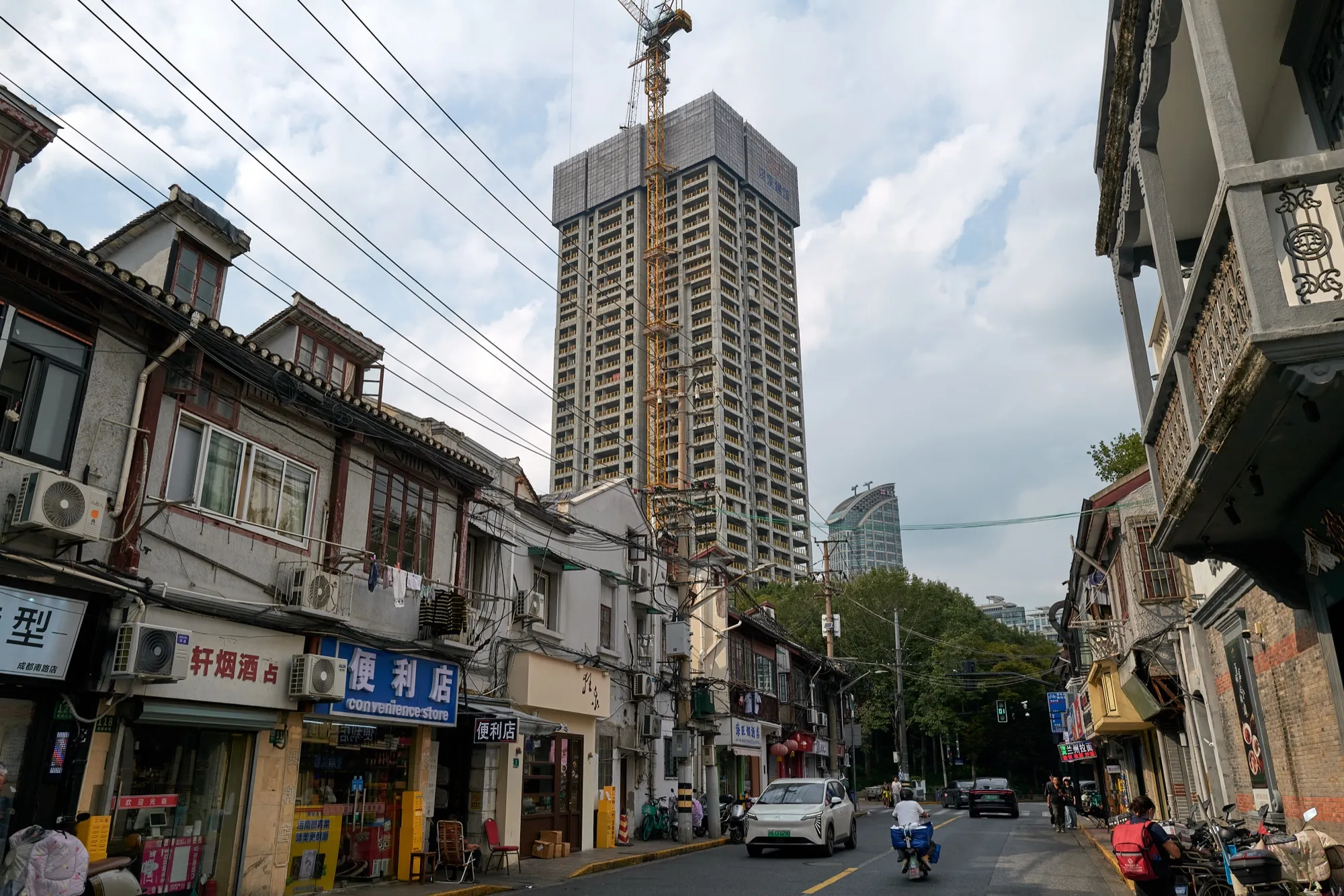
South Chengdu Road. Many lanes used to have a yanzhidian at the entrance, a shop for cigarettes, matches and soap and a meeting place for the neighbours. Today there are convenience stores.
01 / 14A notice is stuck to a black door on Changle Road. It concerns a tingzijian, the smallest chamber of a Shanghai house, above the kitchen, usually the cheapest bed. The notice says that the residents have moved out and that the inside has been taken apart. It is dated 2021.
I was in Shanghai on business and had a few free hours. I wanted to see the old lane neighbourhoods, the longtang. A longtang is a block of terraced houses around a narrow lane; the best-known form is called shikumen, after its stone-framed gate. In the early 1950s Shanghai had more than 9,000 longtang. A survey in 2015 counted about 1,900. What becomes of them depends on the neighbourhood.
On Changle Road almost all the people have gone. The windows are covered with boards, and inside the rooms are empty. A delivery rider circles with a bag of food, looking for the right door.
The house with the notice lies in an area that the district ordered expropriated at the end of 2021. In the year before alone, it signed relocation agreements with about 21,000 households. Not everyone who leaves mourns. A woman told Sixth Tone that she had lived for almost fifty years in 8.8 square metres, her husband and daughter sleeping on the floor. She says she does not regret leaving.
In one lane, men are stripping pipes and scrap metal from the buildings. Across from them stands a couple at an open door. They are clearing out their flat. They tell me they come from Jiangsu Province, have lived here for twenty years and are among the last households still being relocated. The building, they say, is 110 years old. In the dark behind them, someone is cooking.
A few minutes' walk to the east, the lanes are lived in. A board announces that the houses are being repaired: roofs, facades, kitchens and bathrooms. At the end of the street, a tower rises above the low roofs.
Two kilometres further north, houses are waiting for their renewal. Steel girders support their facades. On the ground floor of a corner building, a canvas pretends there is a bookshop and a bar.
Zhangyuan shows how it can go on. The residents moved out, in Shanghai's first project in which houses were expropriated specifically to protect them. Today they hold shops and restaurants. When I was there, the compound was full of visitors, and LVMH held its open days in the villas.
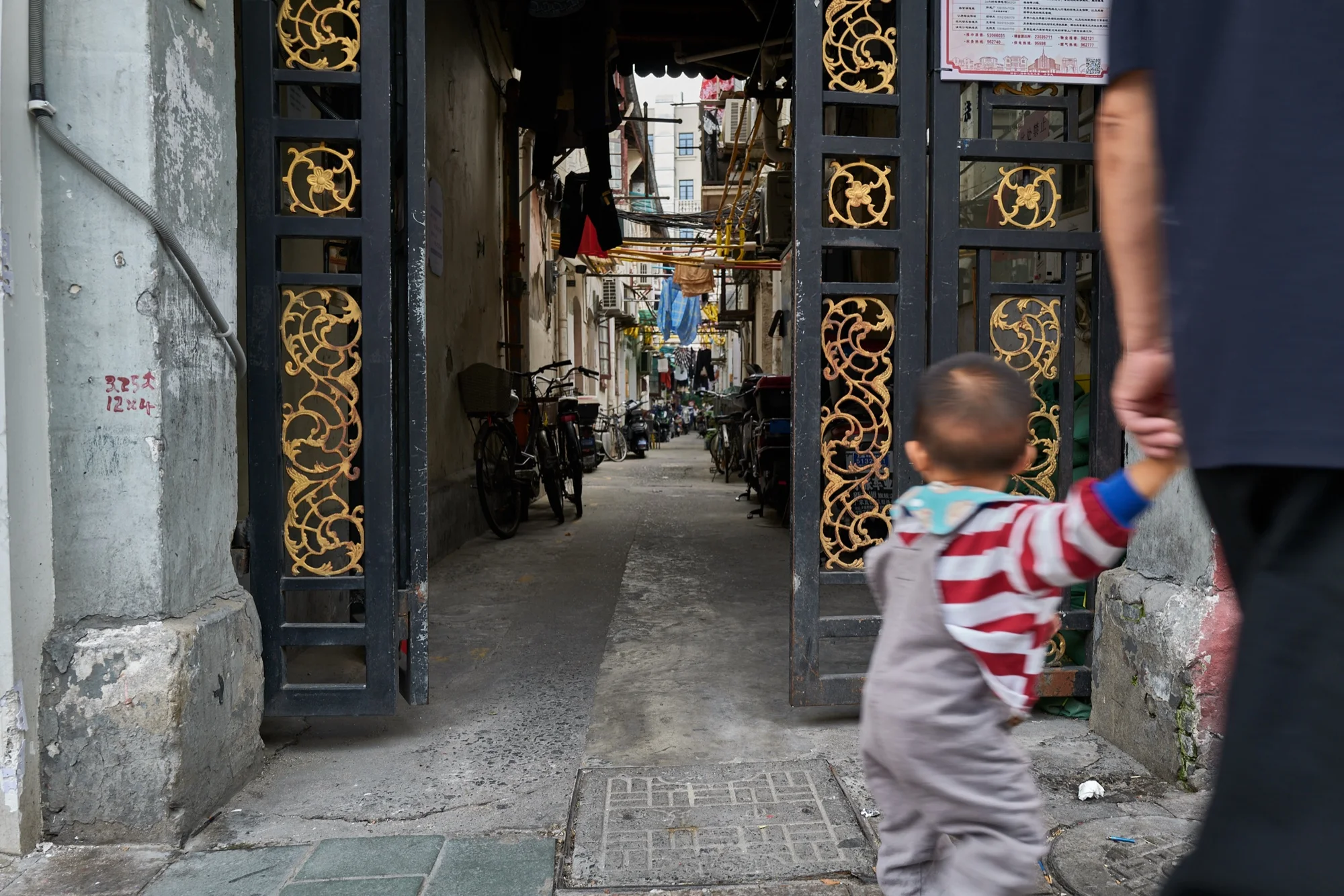
The gilded gate leads into one of the lanes on South Chengdu Road that are currently being repaired.
02 / 14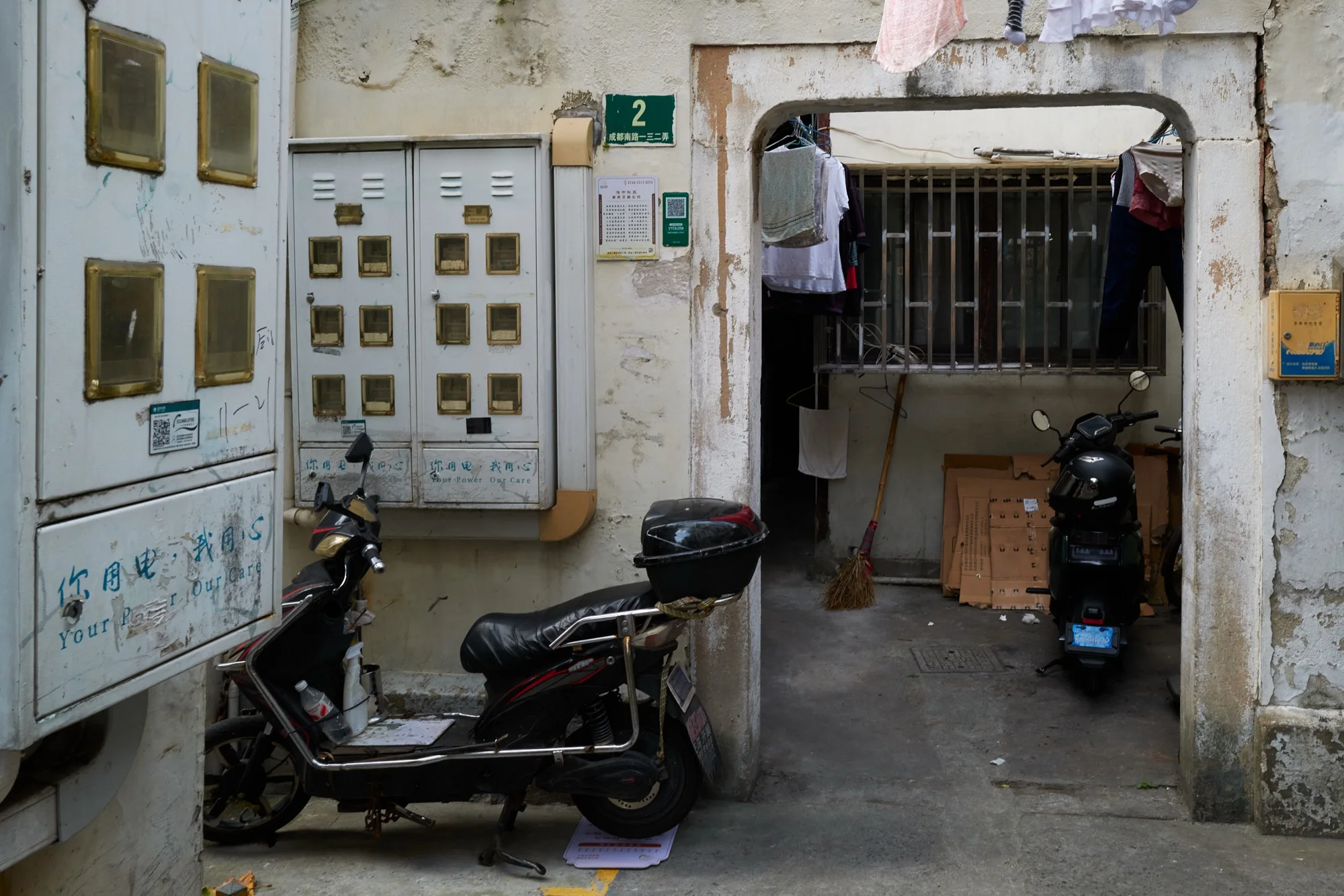
"Your Power, Our Care" is written on the meter cabinets. Behind each small window sits one meter, usually one household.
03 / 14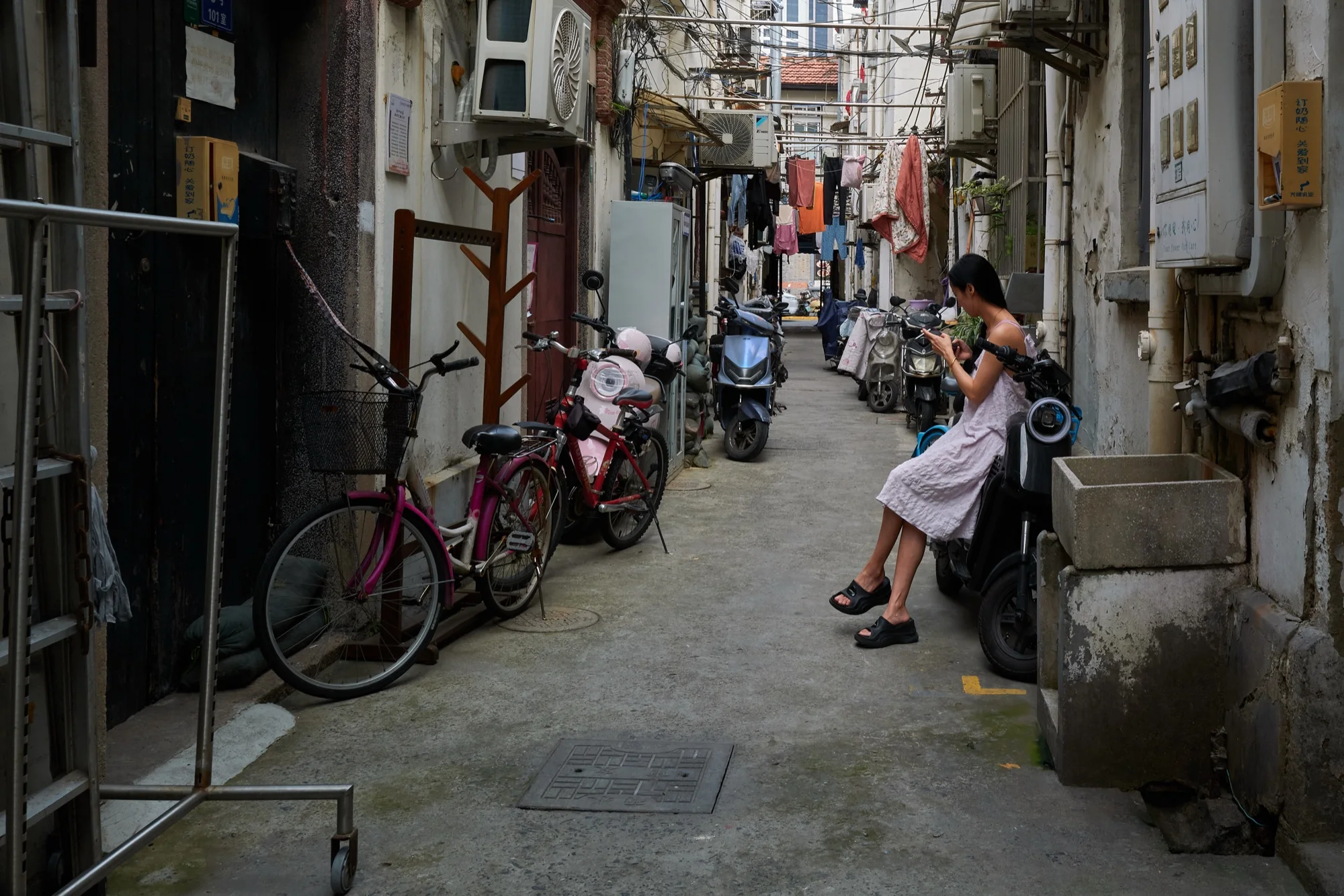
The stone basin at the right was probably once used for washing laundry.
04 / 14
A delivery rider looks for the right address.
05 / 14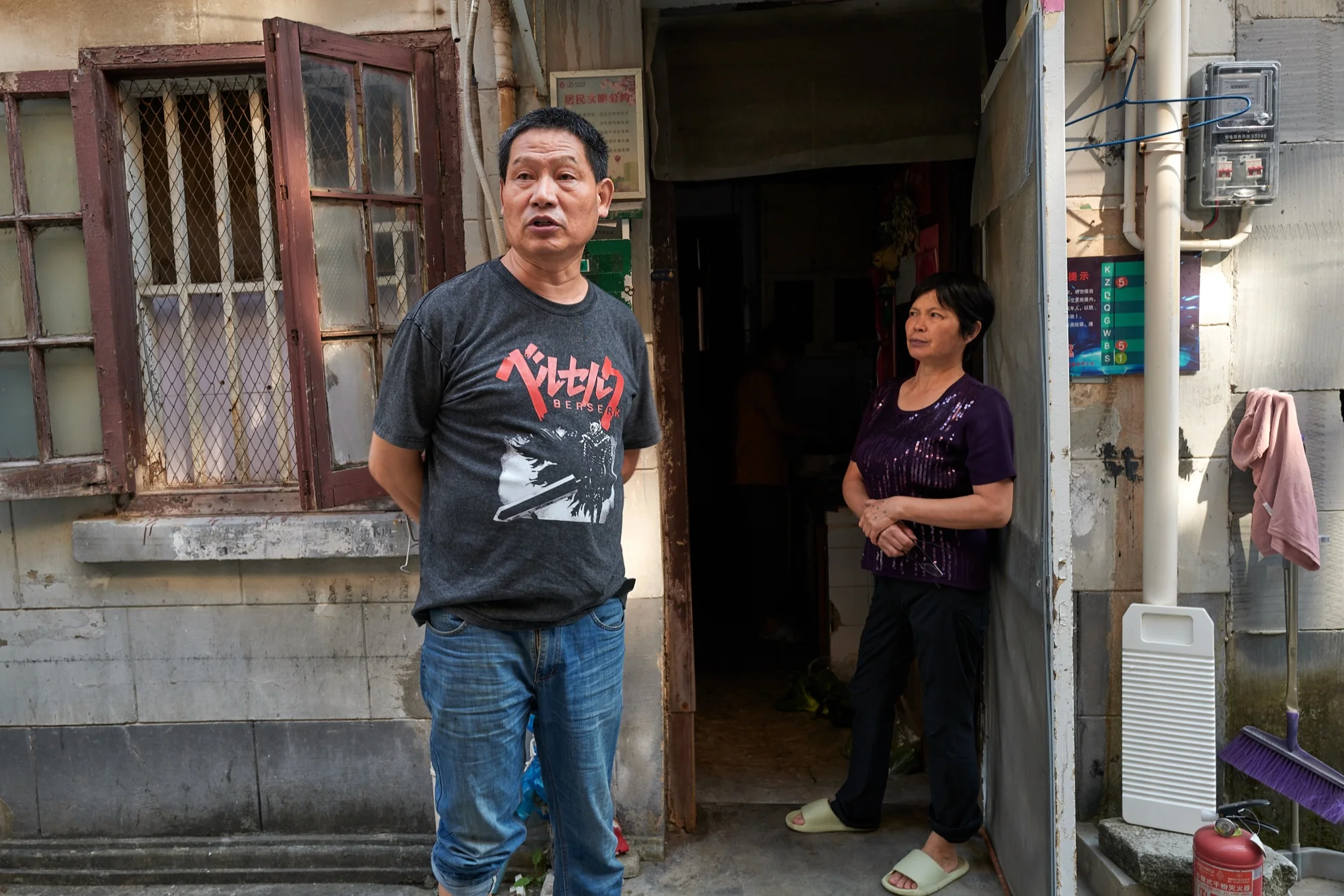
On Changle Road, only very few people can still be seen.
06 / 14
The reliefs at the entrance recall the stone gate that gave the shikumen its name.
07 / 14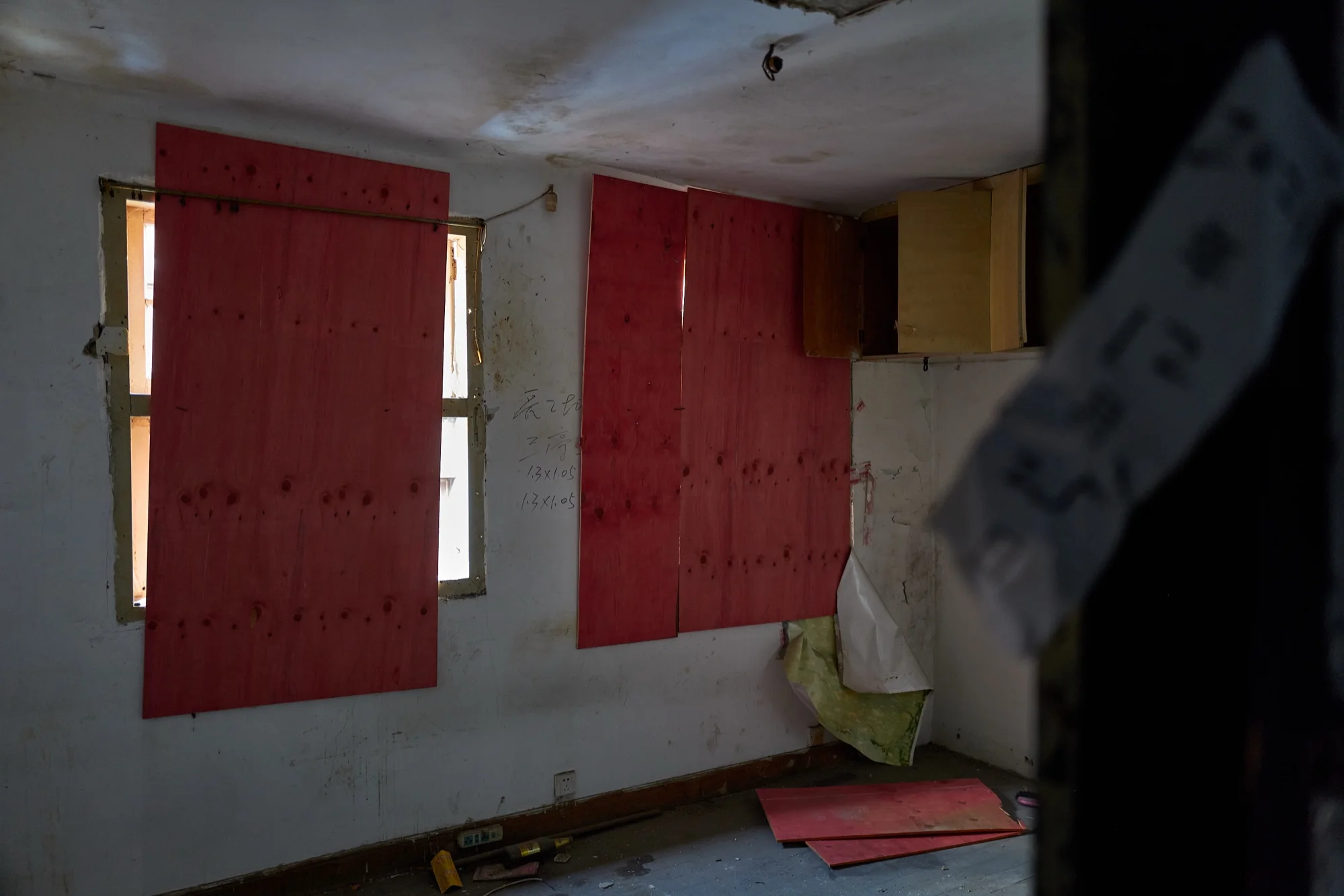
The window measurements are still written on the wall. The red boards were cut to fit.
08 / 14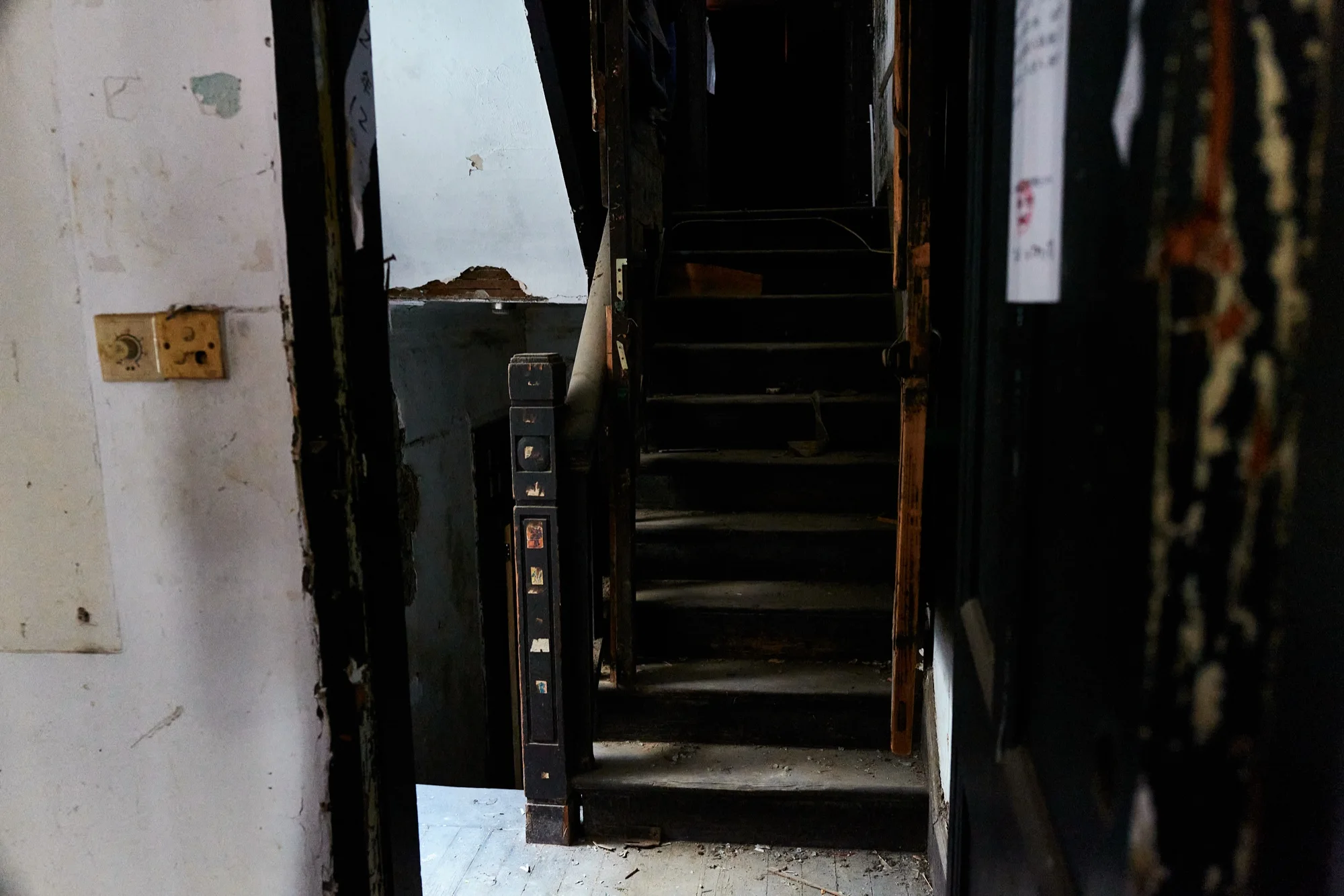
In houses like this, the tingzijian sits halfway up the stairs, above the kitchen.
09 / 14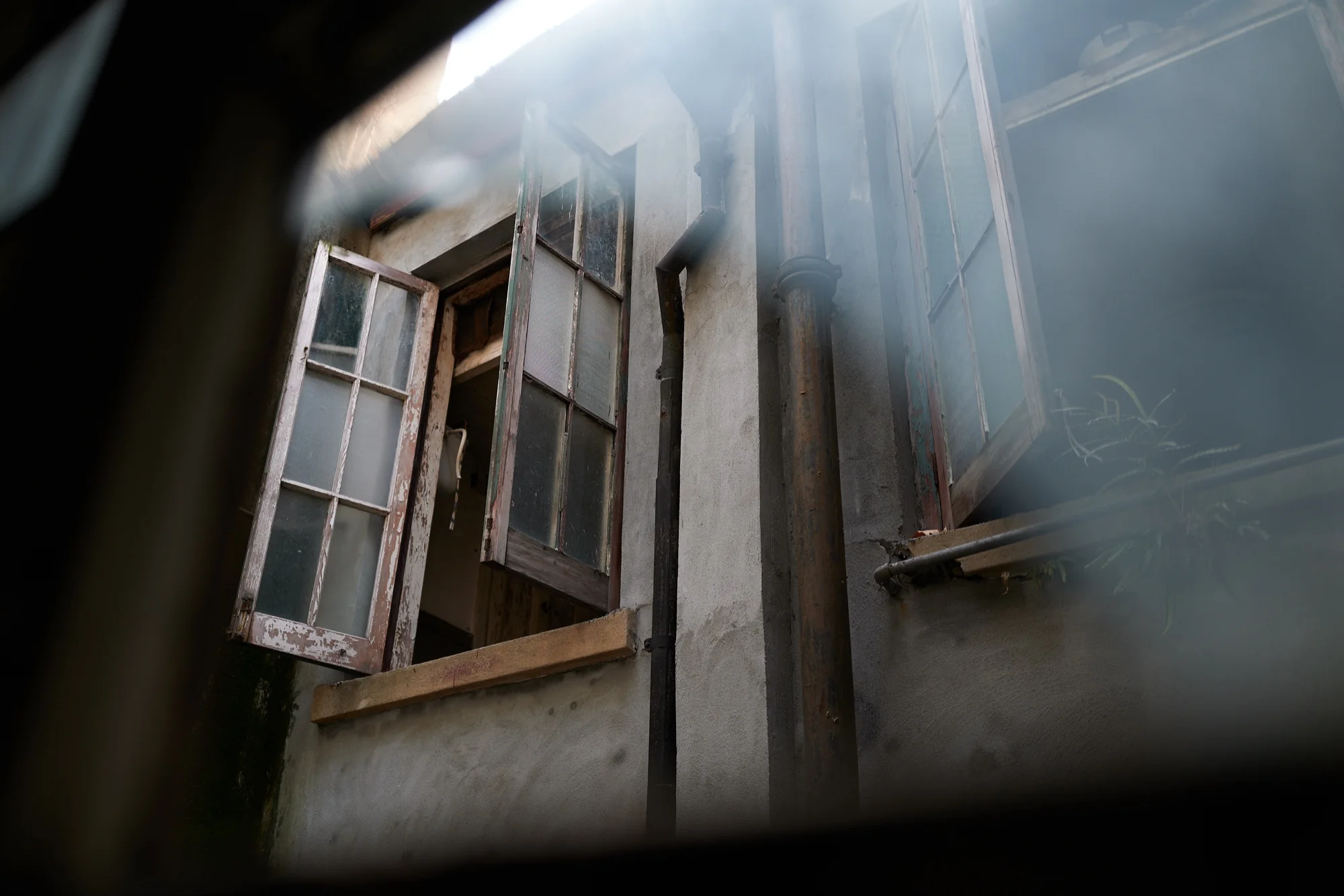
Through a broken window pane, into a courtyard that is now silent.
10 / 14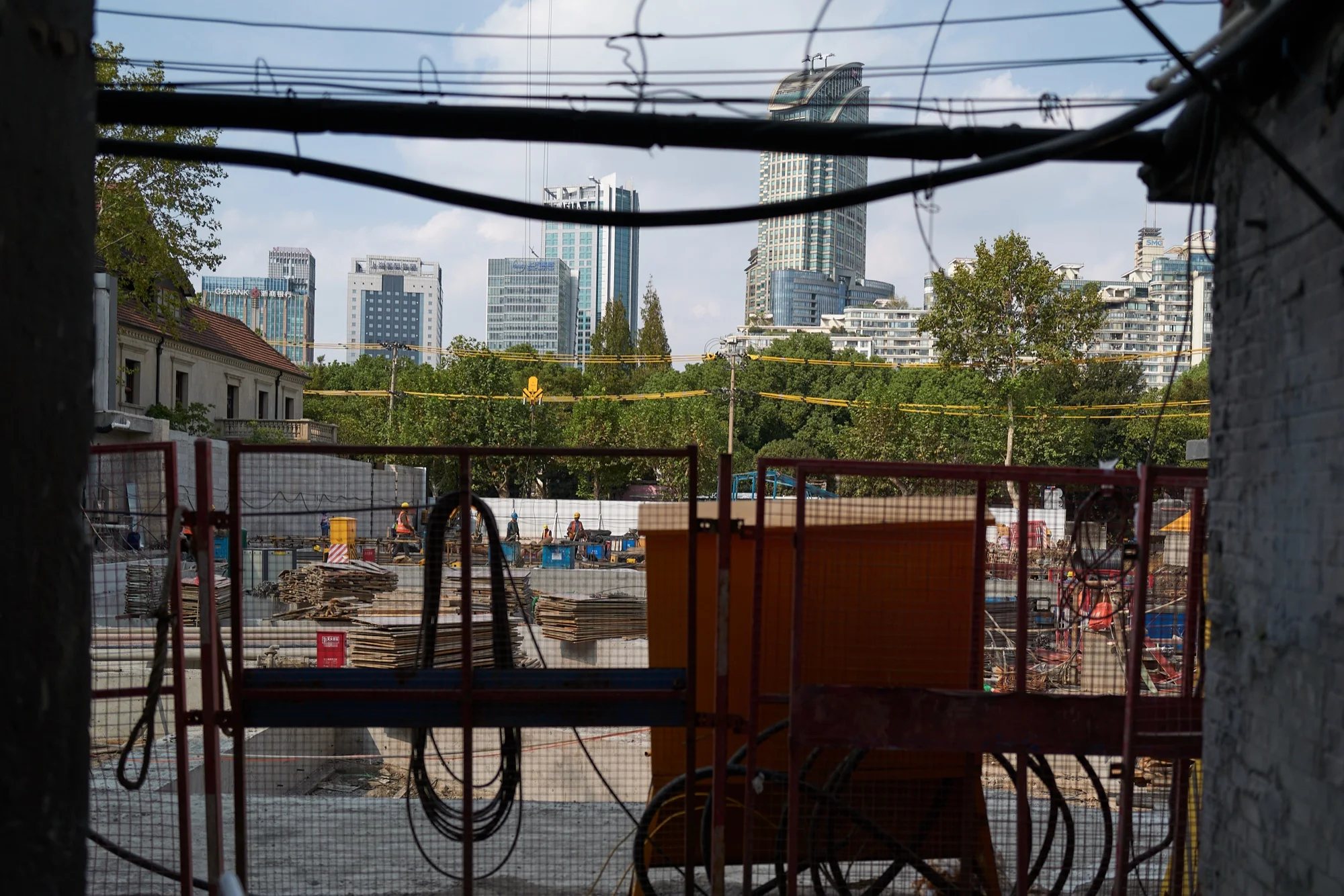
In front of the fence, the old is taken apart; behind it, the new goes up.
11 / 14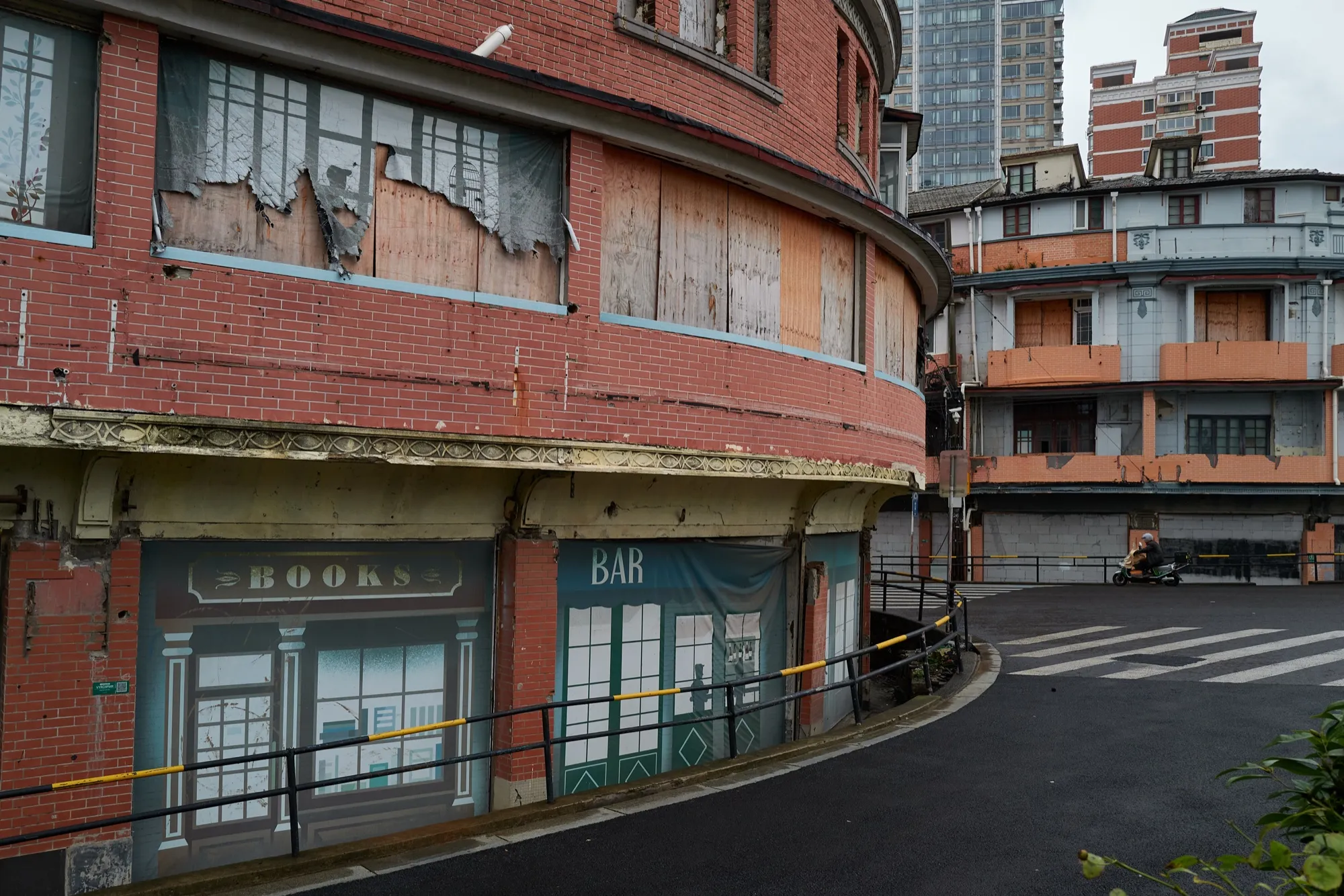
The corner building dates from 1930.
12 / 14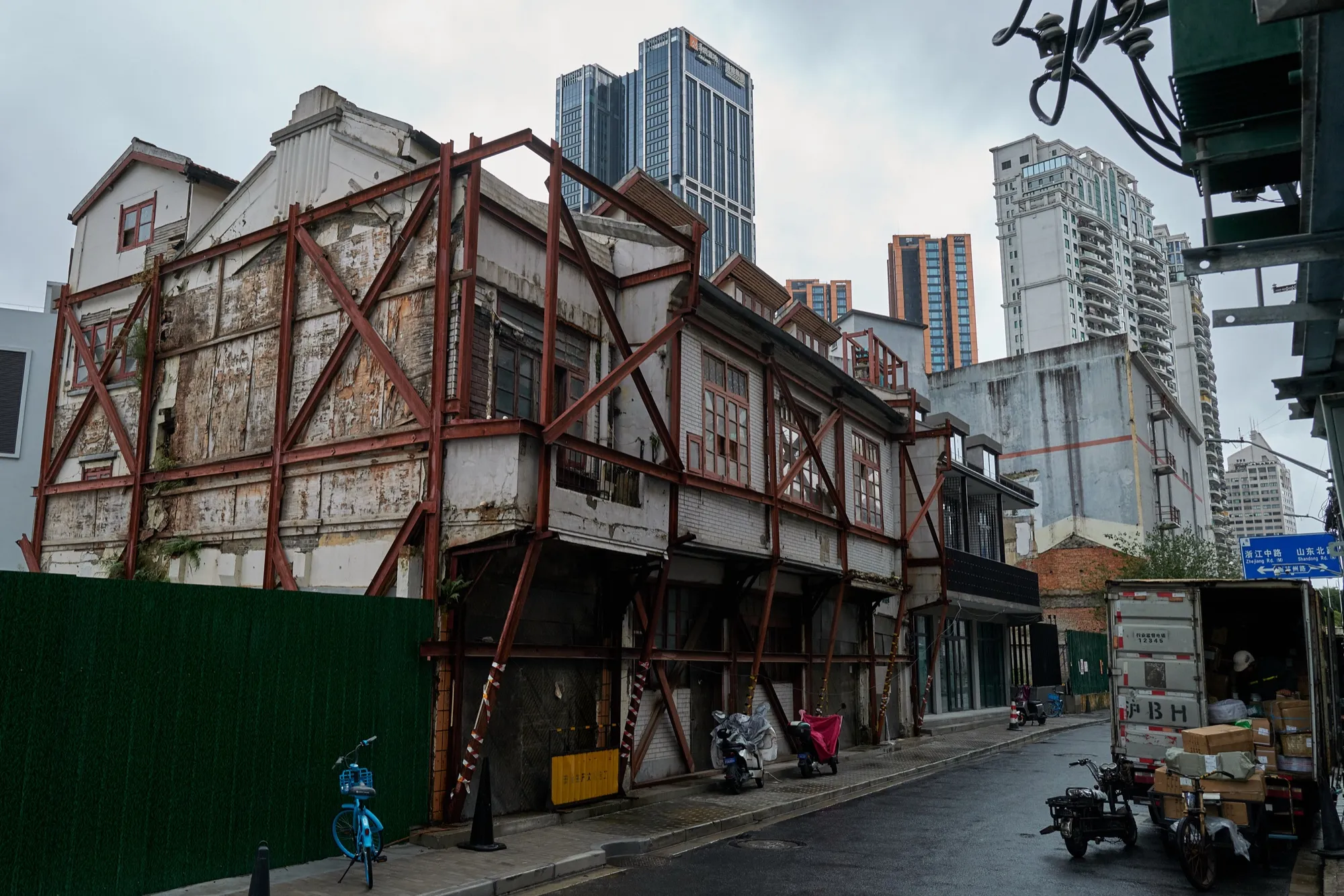
Huangpu's plan of 2026 asks that historic buildings on plots waiting for renewal be looked after. Xiamen Road is on its list.
13 / 14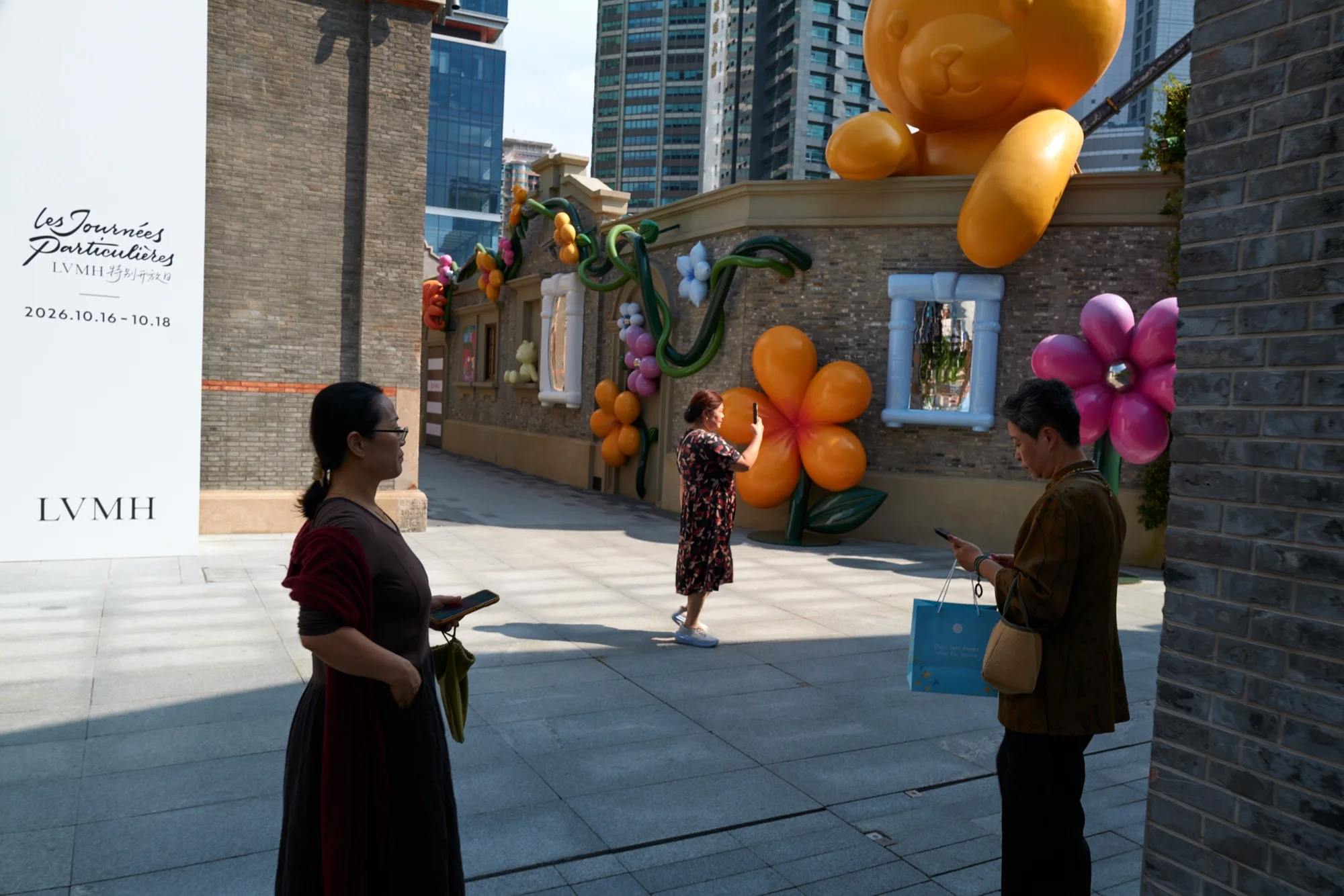
LVMH opened its houses to visitors in Shanghai for the first time, in two buildings at Zhangyuan.
14 / 14Photographs and text: Sergej Arent.
Sources: Huangpu District Statistics Bureau, 2020 statistical bulletin; Huangpu government expropriation decision of 12 November 2021; Sixth Tone, 21 November 2025; Huangpu urban renewal plan 2026 to 2030; China Daily and Swire Properties (Zhangyuan); survey of the Shanghai CPPCC, 2015, and Chinese Wikipedia (number of lanes); The Paper, 30 January 2020 (yanzhidian).