Khat
“Go on, try it”
Khat is a leaf chewed for its stimulating effect, and it does not keep. In May I followed it around Harar, in eastern Ethiopia, for a week: from one farmer's field before sunrise, through the market at Awaday, to the clear plastic bags in the streets of the old town.

A worker at Awaday, Ethiopia's largest khat market, with leaves between his teeth.
01 / 38The field
It was still dark when we left Harar with our guide, Abdul, and colder than I had expected. Shortly after we set off, I asked the driver of the bajaj, the three-wheeled taxi, to turn back so I could fetch a jacket. We picked up the farmer, Ame Adem, by the main road. He hardly spoke that morning.
I had imagined a crew of pickers. There was one man and one helper. He does not cut a bush clean. He walks the rows and takes a branch here and there, wherever new leaves have come through. A large mango tree stands in the middle of the field and gives shade. The guide told us that every farm has one.
When the cloth is full he lets the cattle out of the small stable, ties up the harvest and loads it into the bajaj, which somehow takes all of it. Before seven he is back in Harar, on a street where women are already selling khat. In Harar, selling khat is women's work.
The leaves are best on the day they are cut, and within about two days most of their effect is gone. For this farmer that is no problem: like many farmers in the region, he takes his harvest straight to the market in Harar, a short ride away. Much of the rest goes to Awaday, one of the largest khat markets in the region, and from there on across borders. That load has to reach its buyers before the two days are up.
Across much of eastern Ethiopia, coffee has given way to khat, which people here call chat. It grows all year, can be cut several times a year and needs less water. In a recent survey of nearly 800 farm households in Hararghe, about two in three had replaced coffee with it. Harar and the two Hararghe zones now hold half of the country's khat farms. In Ethiopia khat is legal, and in Harar it belongs to daily life: to work, to the afternoon, to the way guests are received.
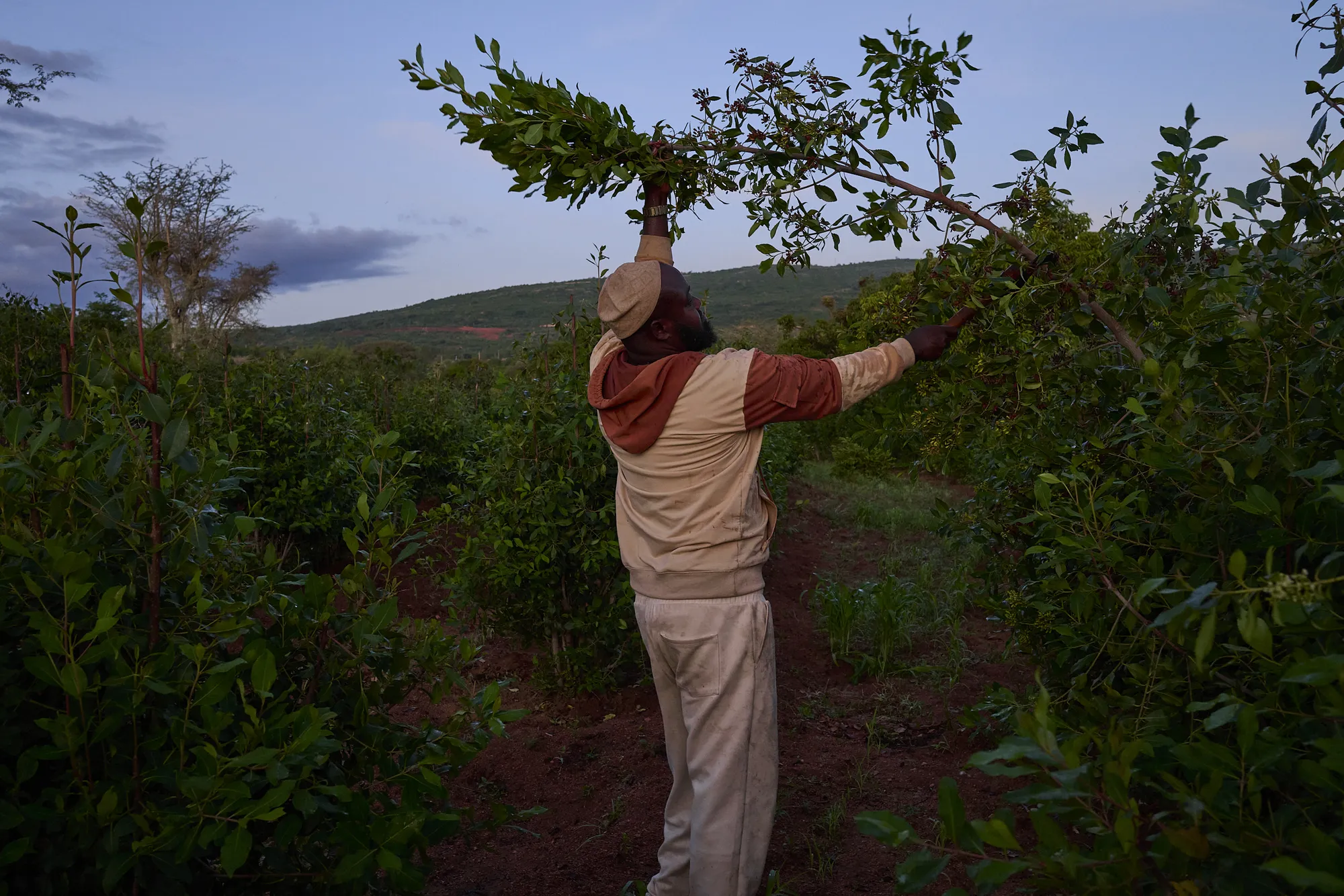
He cuts a branch here and there, wherever fresh leaves have grown.
02 / 38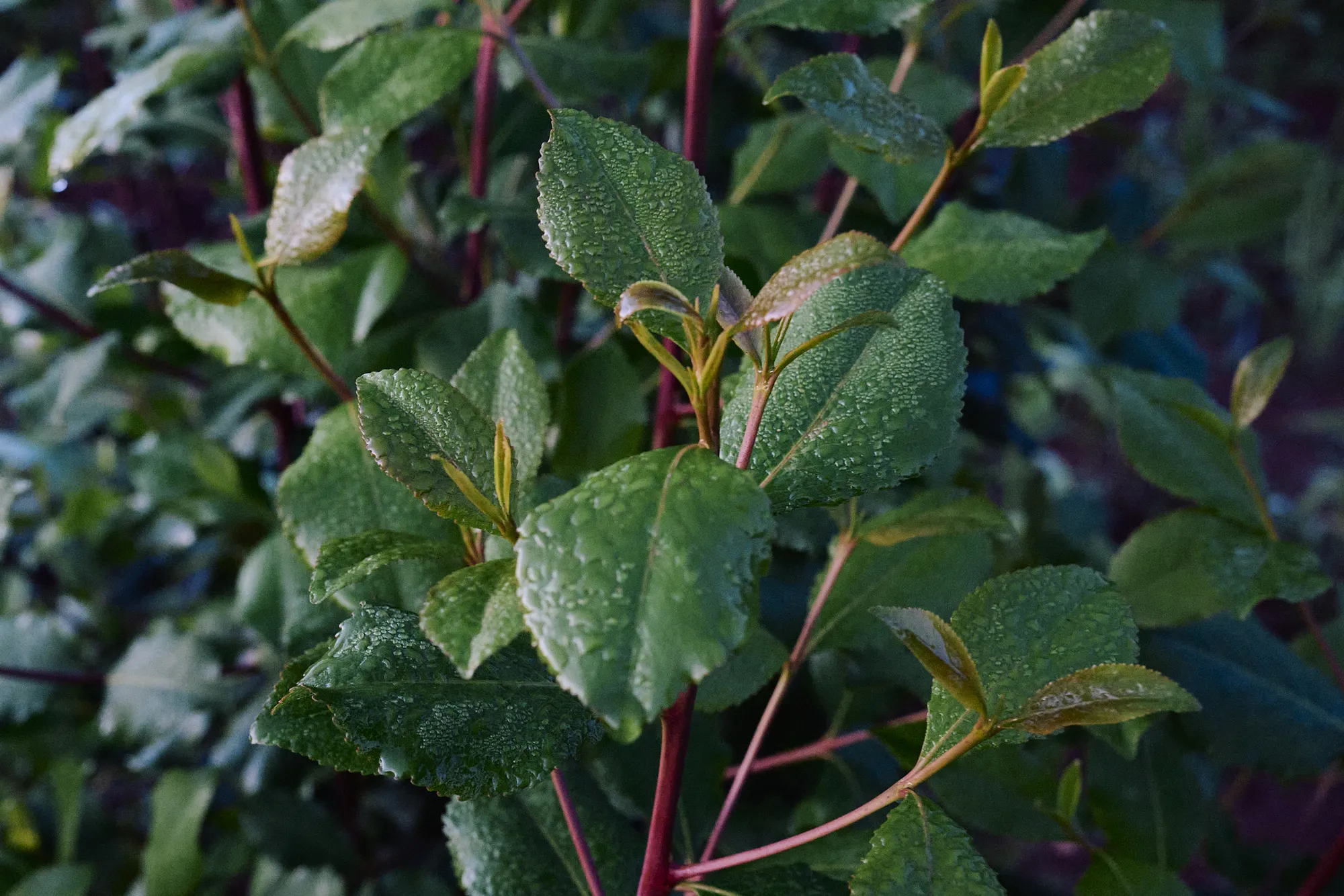
Dew on the new khat leaves. These young tips are what buyers will pay the most for.
03 / 38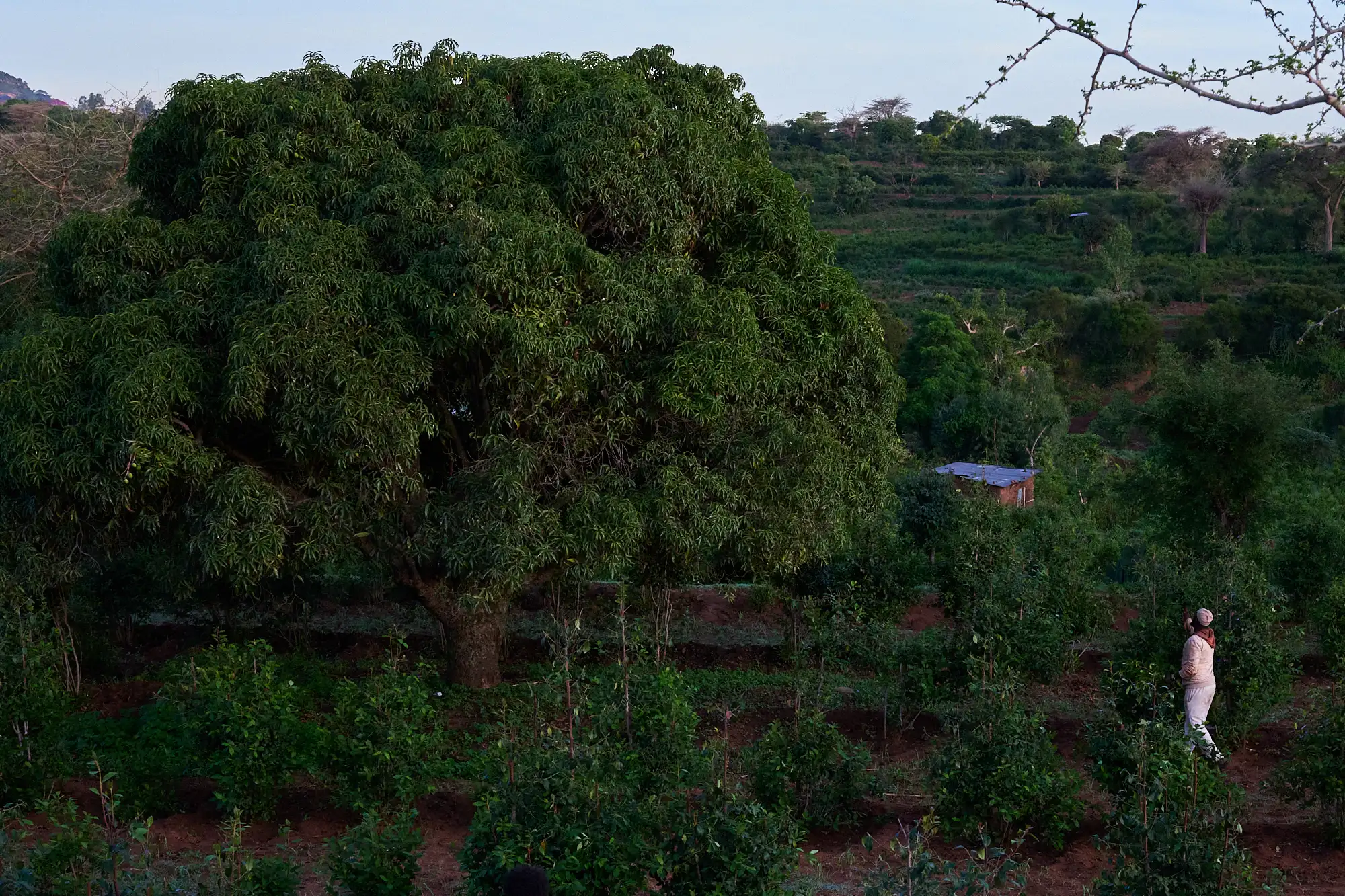
The farm near Deker at first light. A large mango tree gives shade to the rows.
04 / 38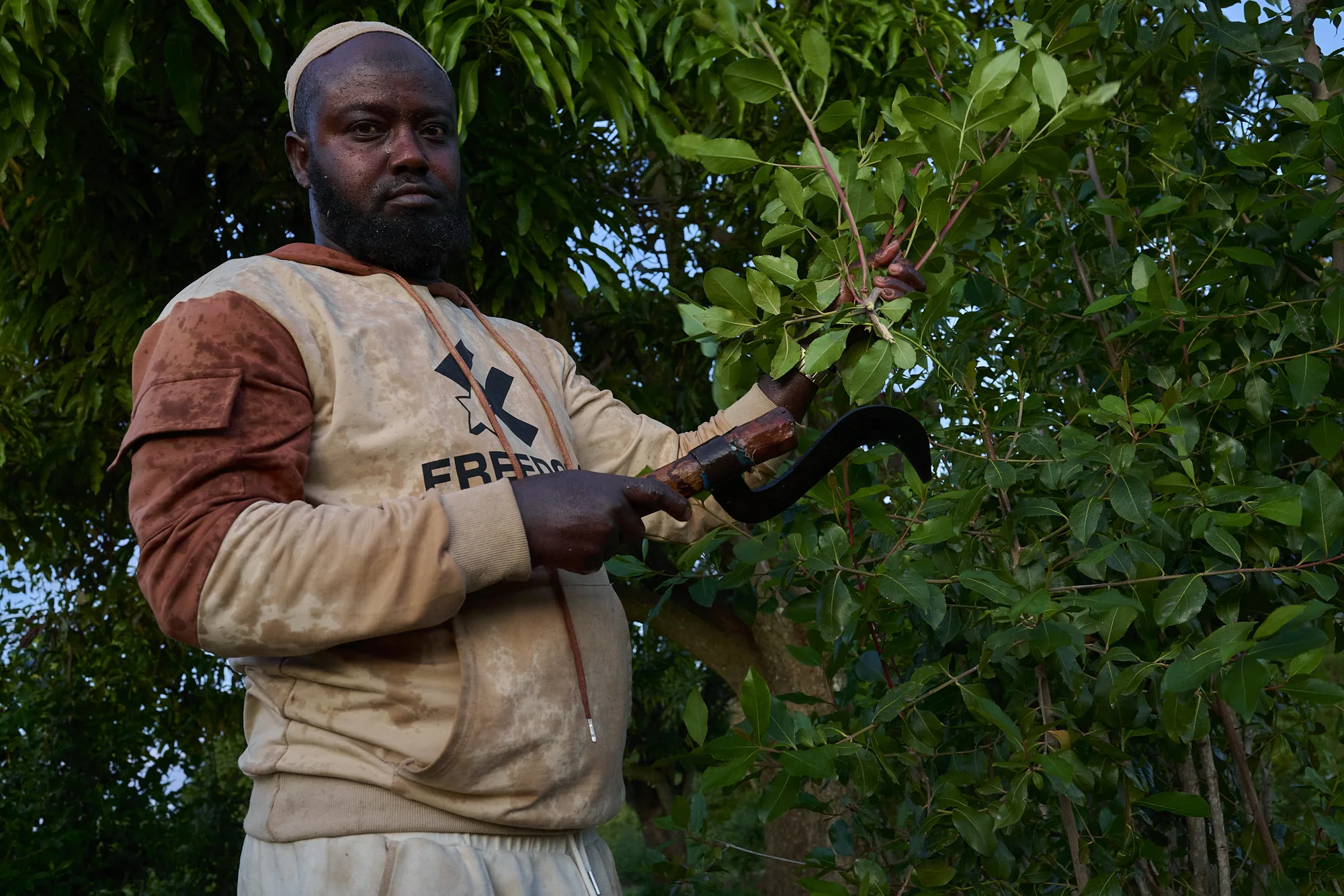
Ame works the rows with a hooked knife.
05 / 38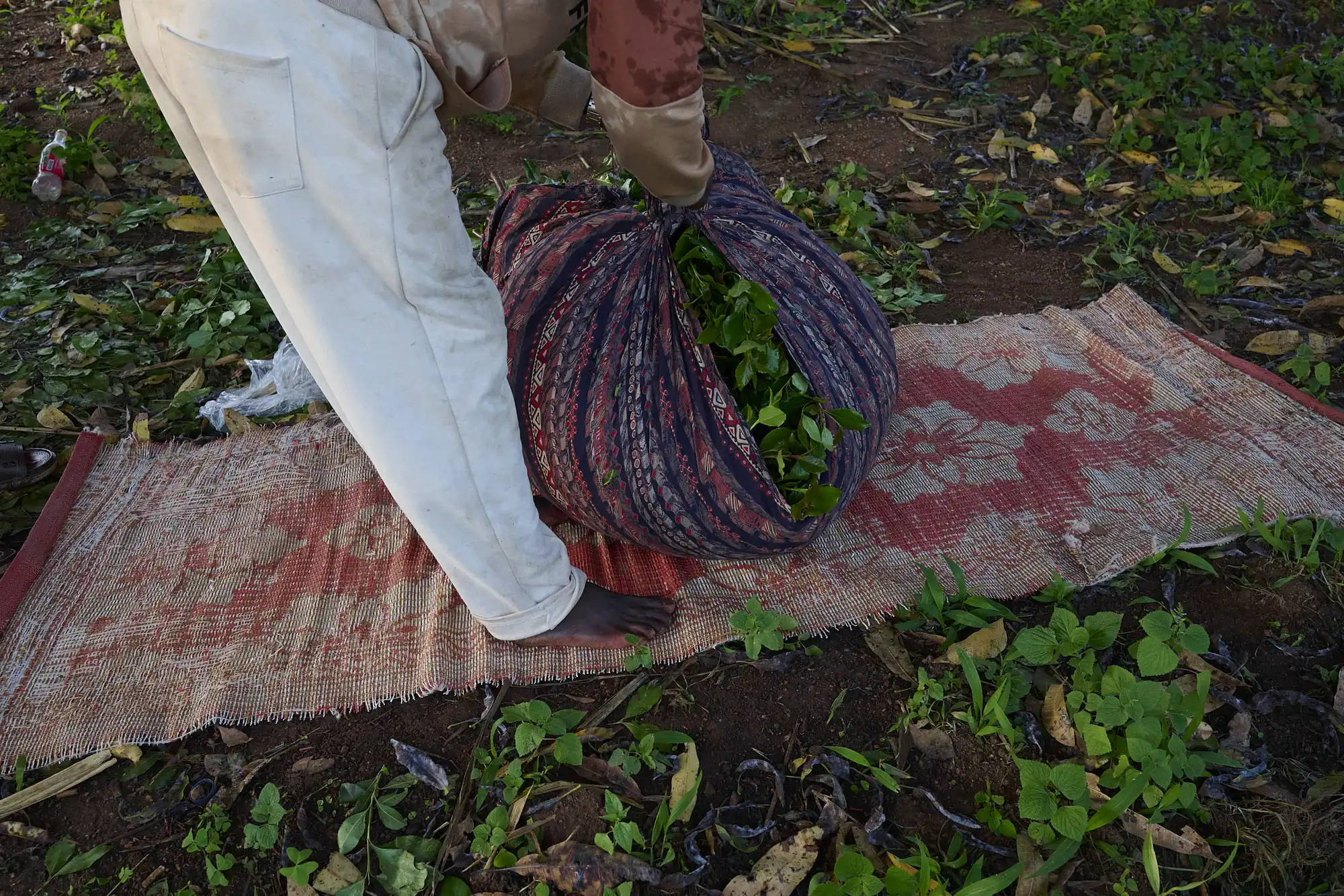
The morning's harvest, tied into a cloth.
06 / 38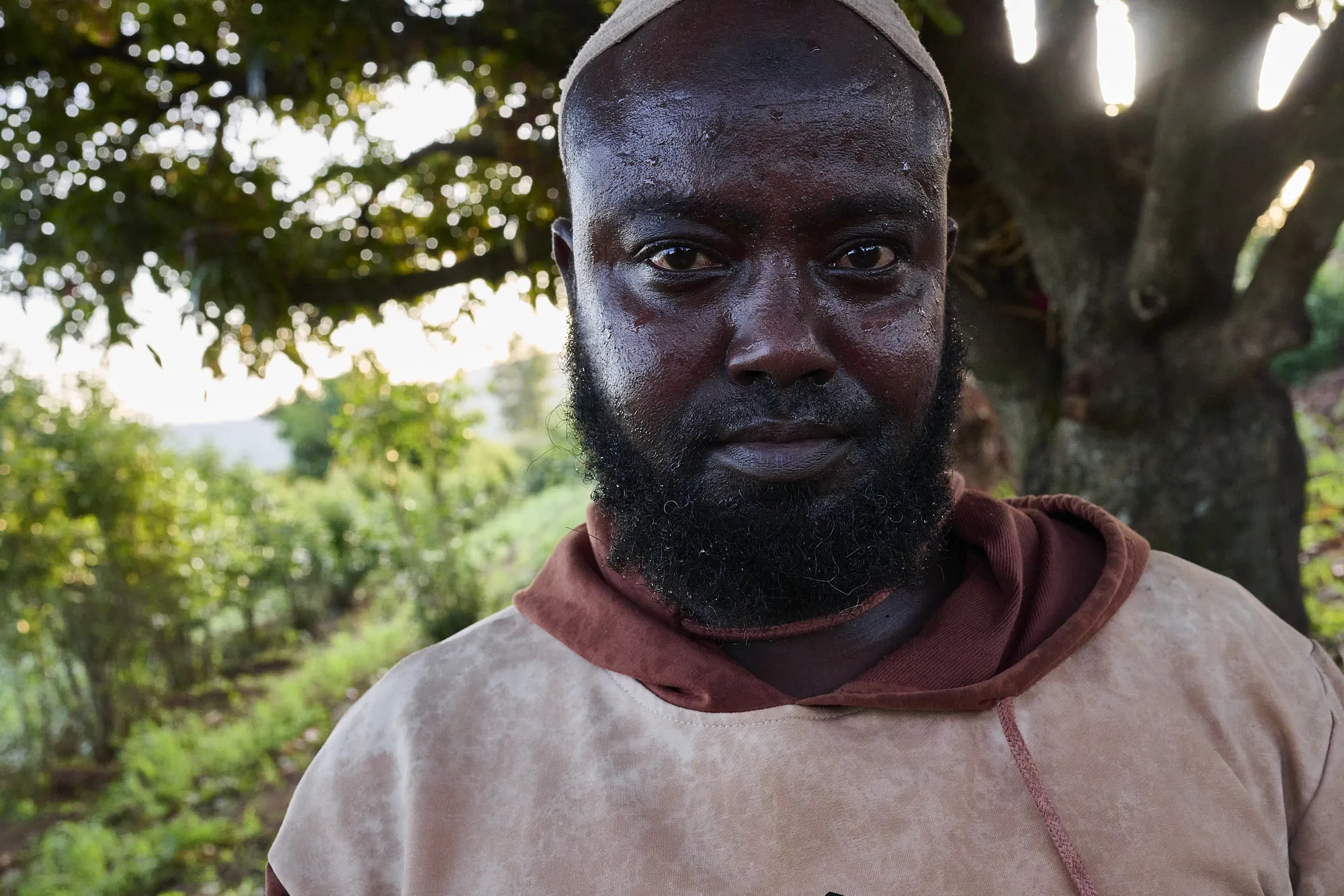
Ame Adem, after the cutting.
07 / 38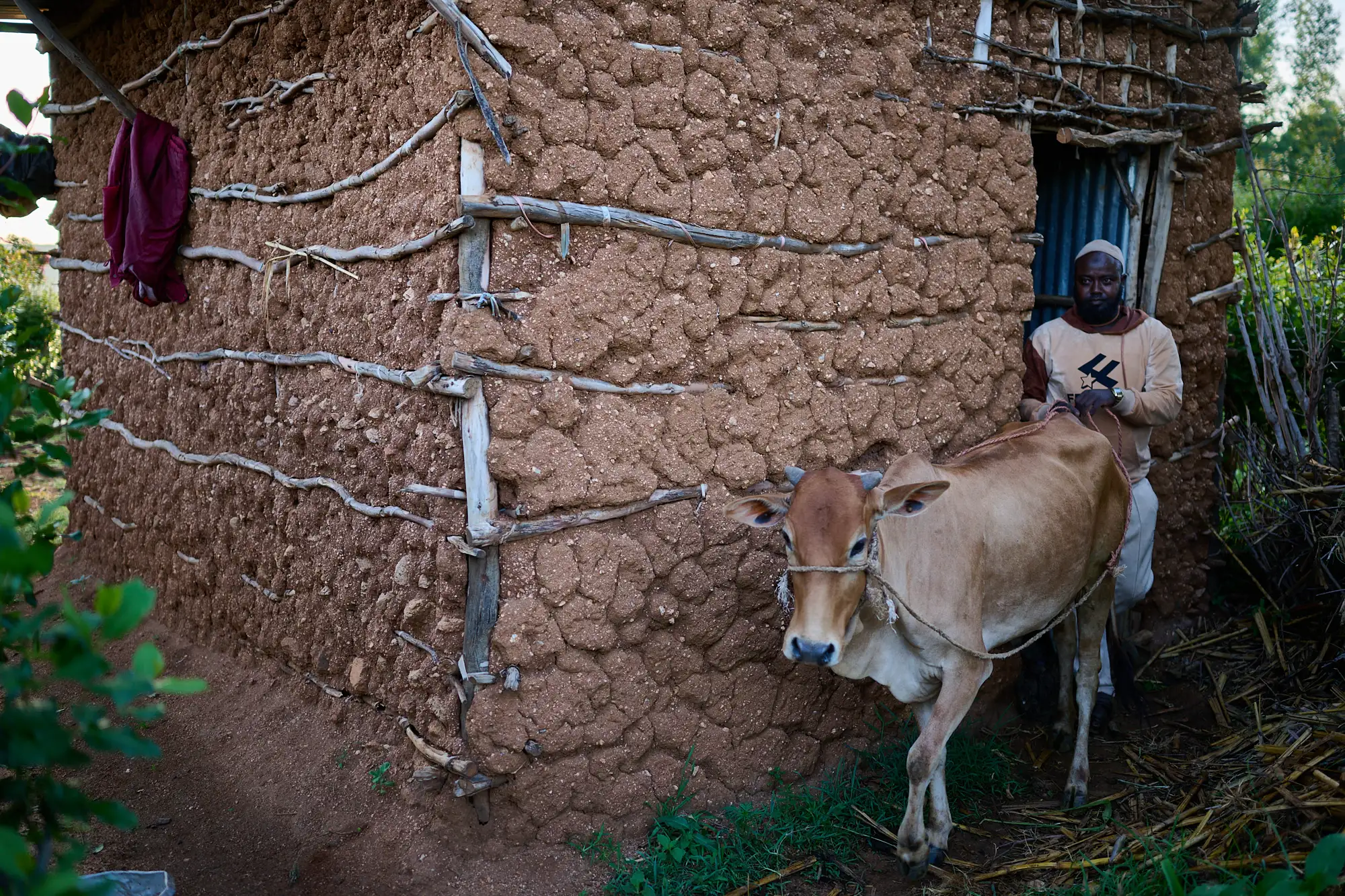
Then the cattle are let out.
08 / 38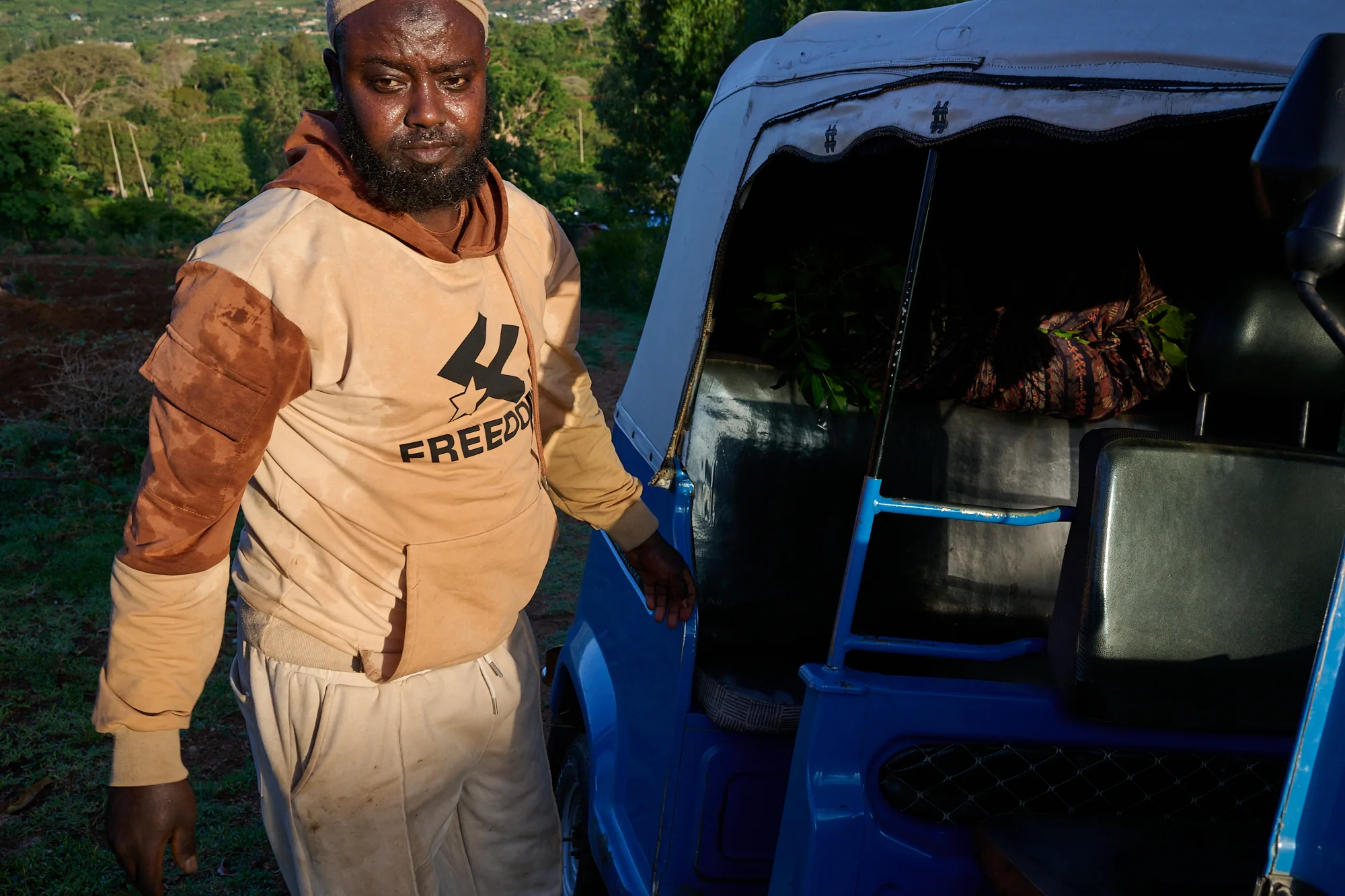
The harvest goes into the bajaj, bound for Harar.
09 / 38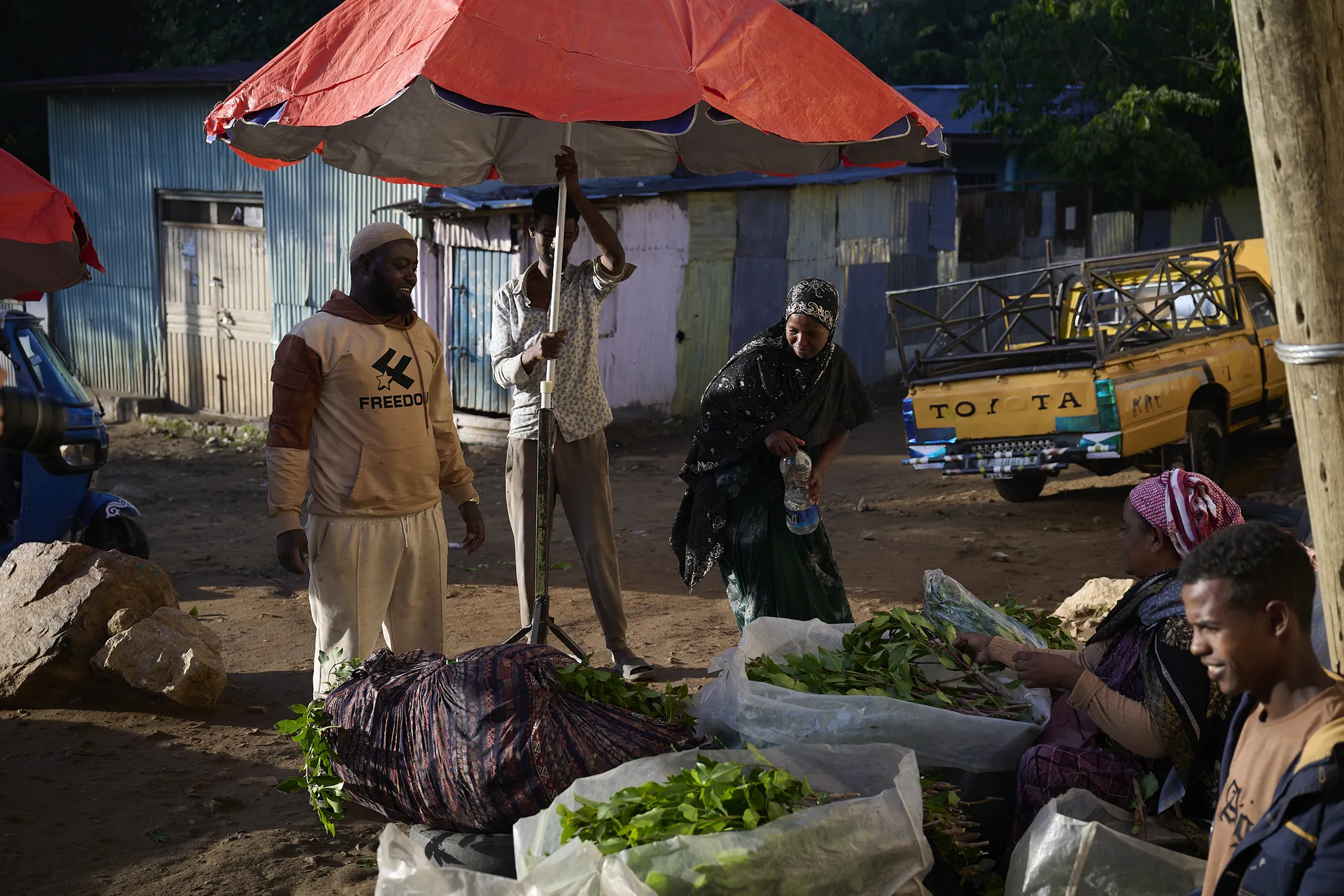
In Harar, where women are already selling.
10 / 38The market
Awaday lies about ten kilometres from Harar, and farmers and traders from across the region bring their harvest here. Khat is cut in the morning, and I had worried that we were arriving too late. The guide said the market never closes.
After the quiet streets of Harar it feels like a film played at double speed. Trucks come in and are unloaded in minutes, bajajs squeeze between them, and nobody seems to stop, yet everyone knows where they are going. Red and green everywhere. Wherever you step, there is khat under your feet.
Inside the warehouses you take off your shoes. One or two bulbs hang from the ceiling. Men tie the leaves into bundles of the same size and stack them, chewing as they work. In some rooms men simply lie on the floor and rest. Women with children were tying bundles in the corridors outside.
After a while the children surround you and it is hard to work, and grown men come over and ask to be photographed.
From Awaday the bundles go on by truck, many of them through the night, to Djibouti and Somalia and across the water to the Arabian Peninsula. Khat is one of Ethiopia's most valuable exports: in 2022 and 2023 the trade was worth more than 217 million dollars, about six percent of everything the country sold abroad. Until 2013 and 2014, London and Amsterdam were on the list too. Today khat is banned in almost all of Europe.
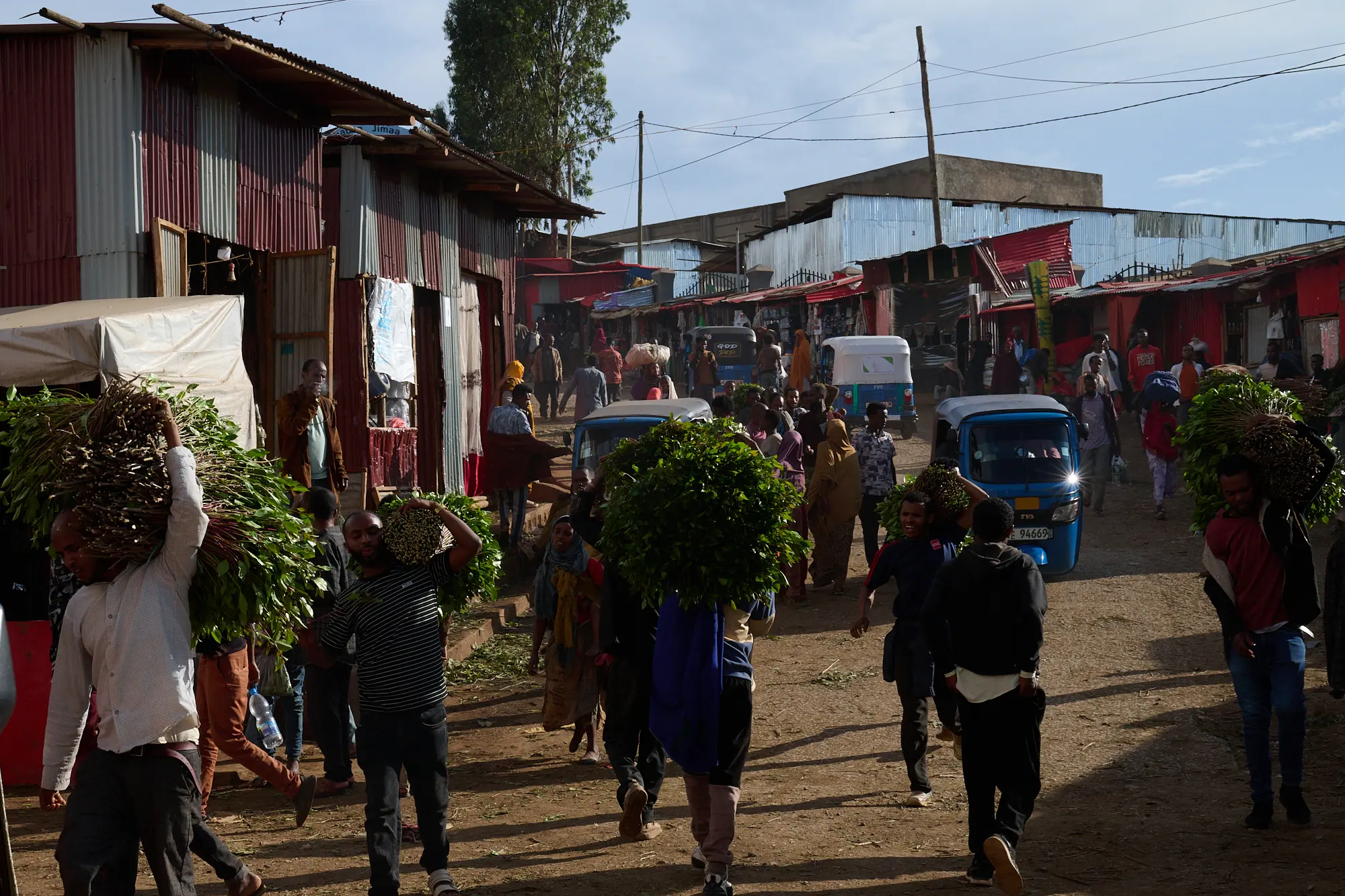
The main street of Awaday in the afternoon.
11 / 38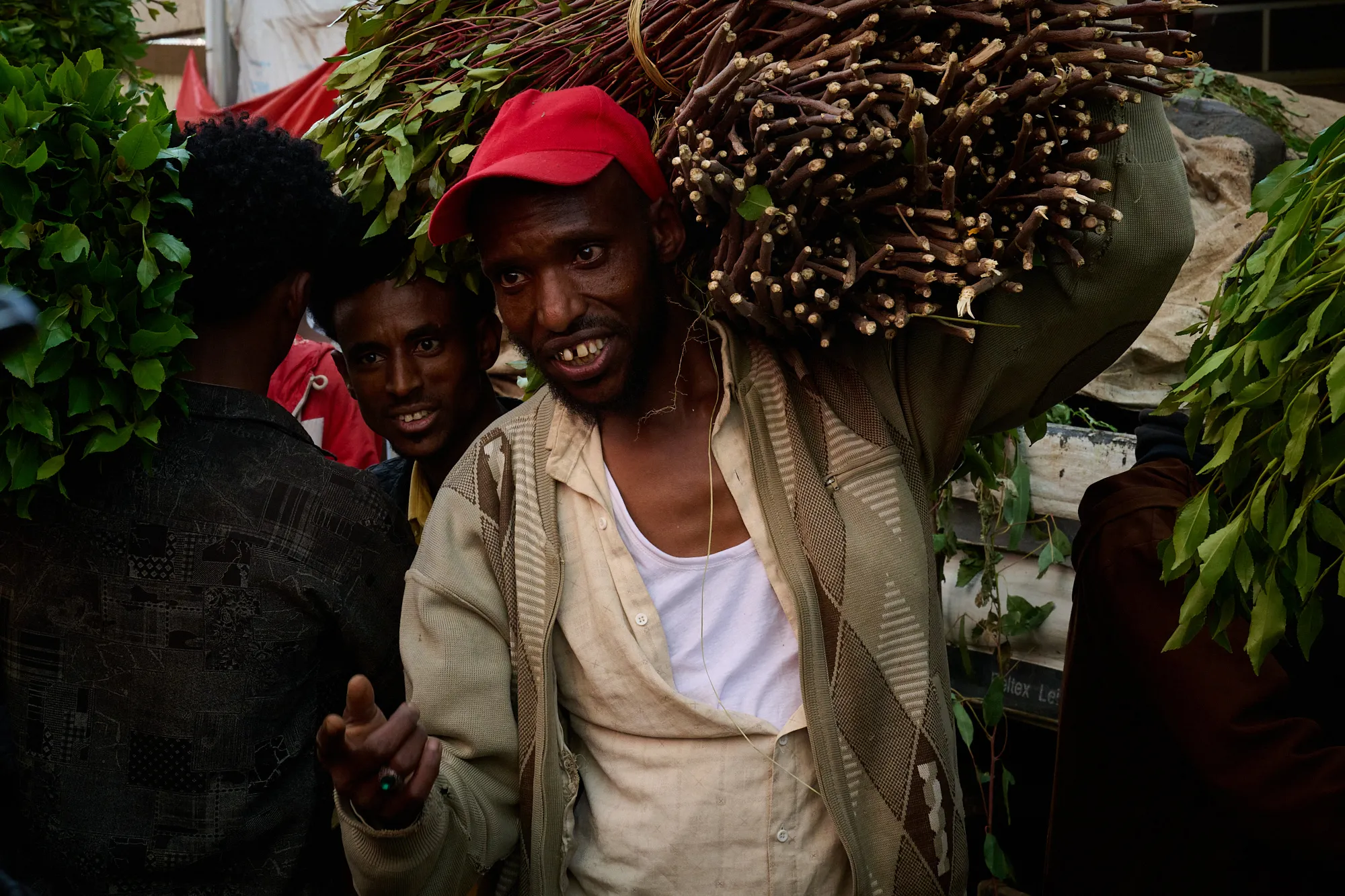
A porter making his way through the crowd.
12 / 38
No room to move at the pickup, yet still time to share a few leaves.
13 / 38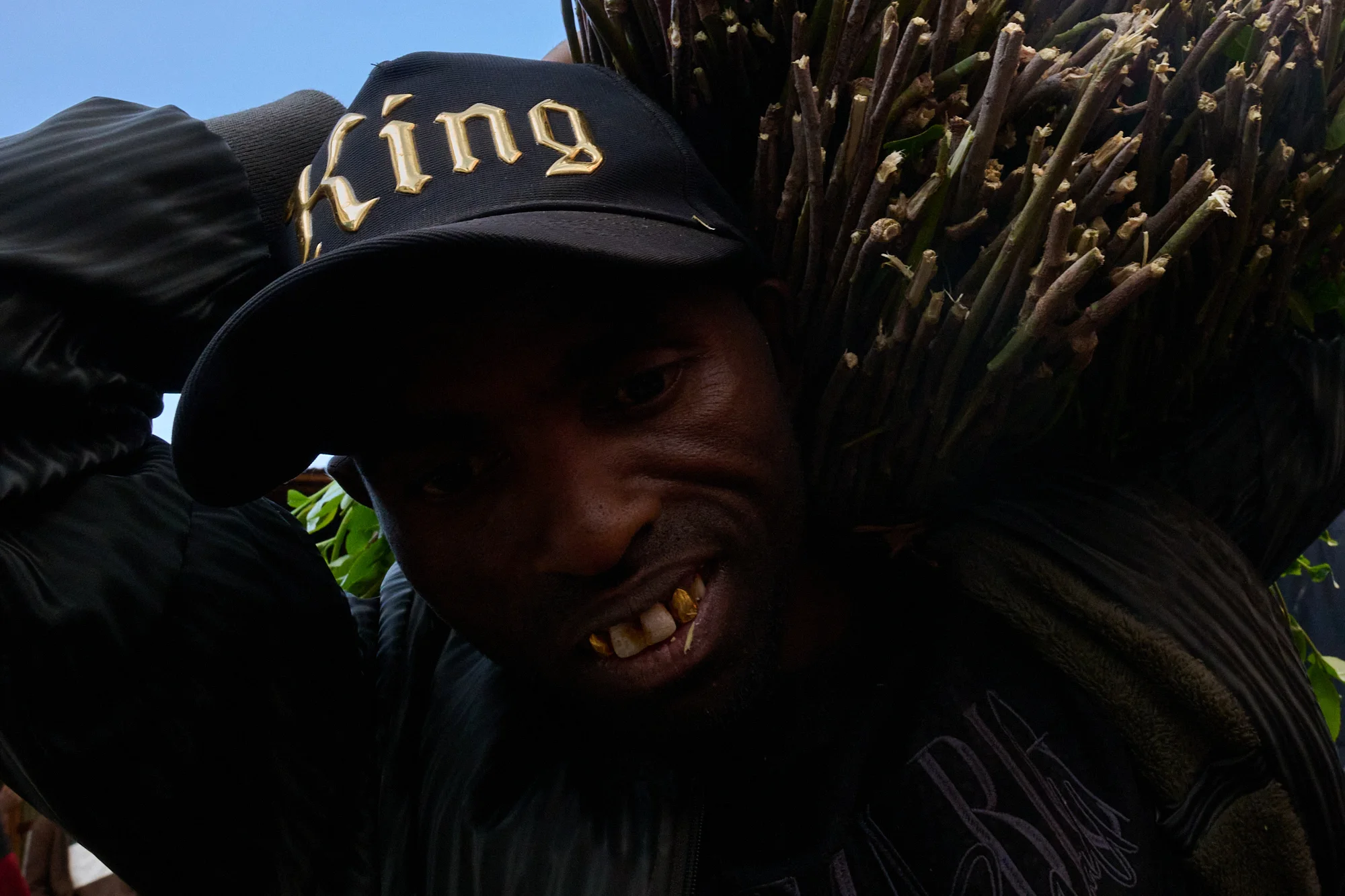
Under a full load.
14 / 38
Between the sacks on the back of a truck.
15 / 38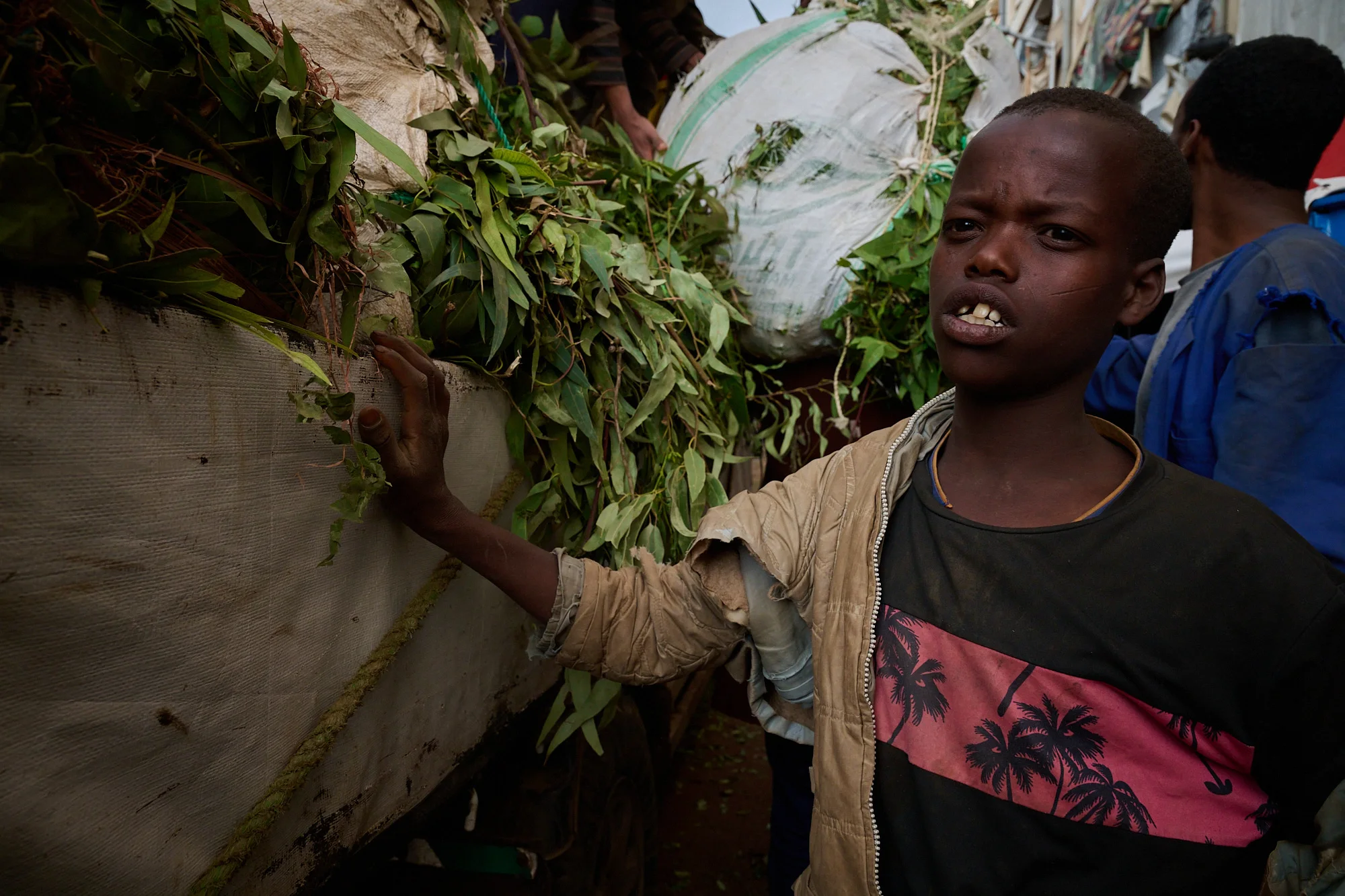
Young, and already working among the trucks.
16 / 38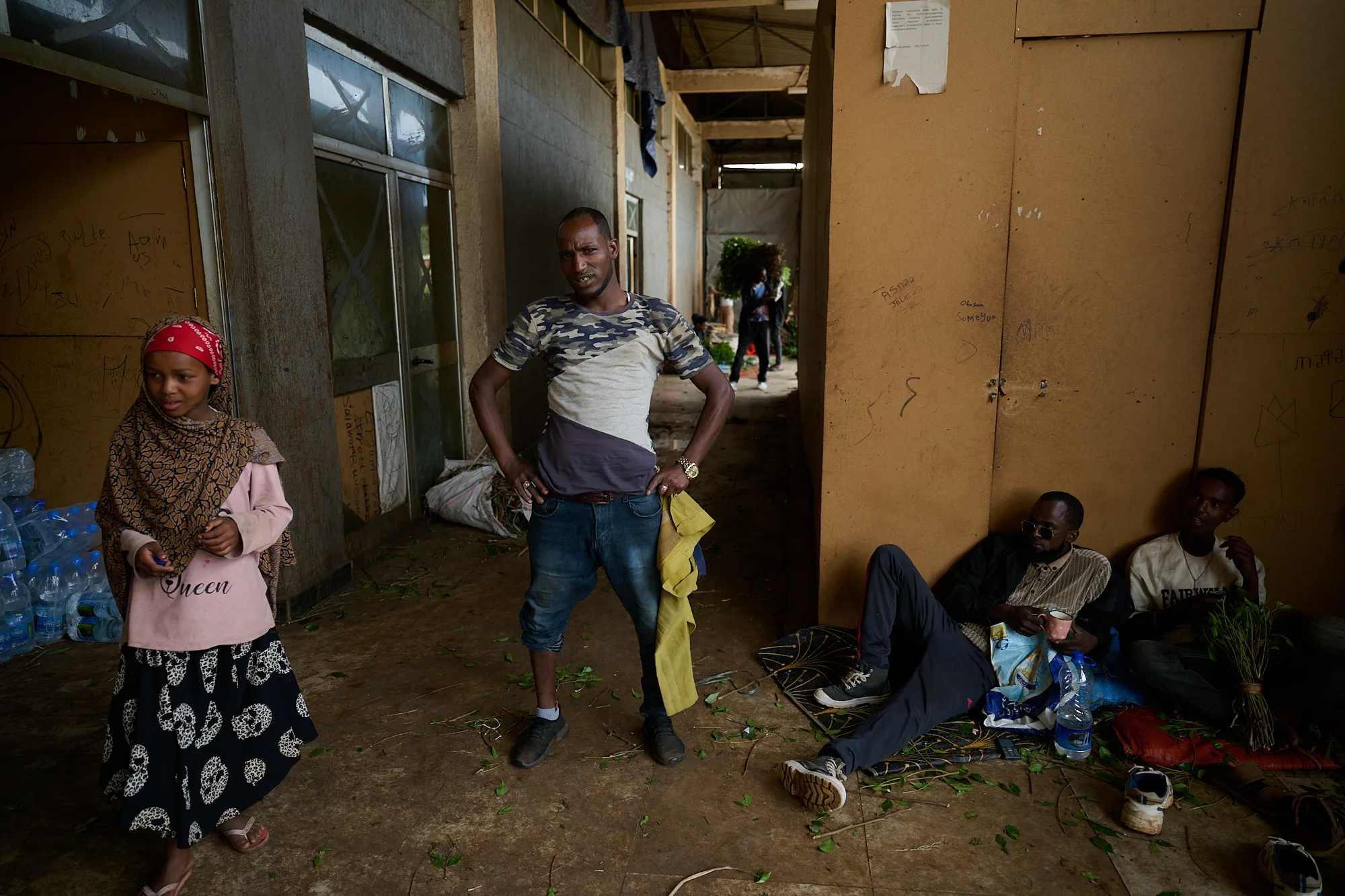
A corridor between the halls.
17 / 38
Chewing at work.
18 / 38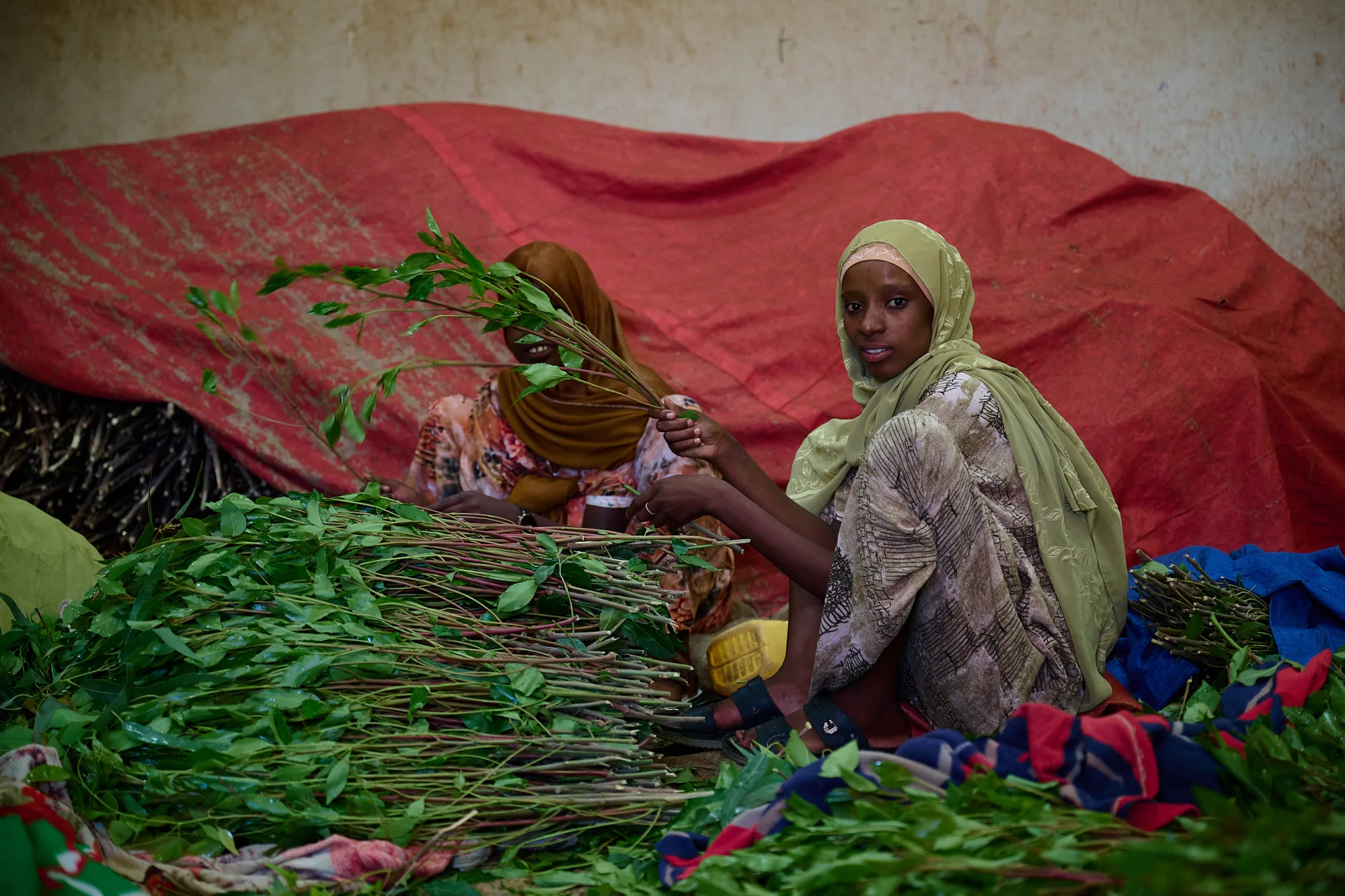
Most of the sorters at Awaday are men. These two have found their place among them.
19 / 38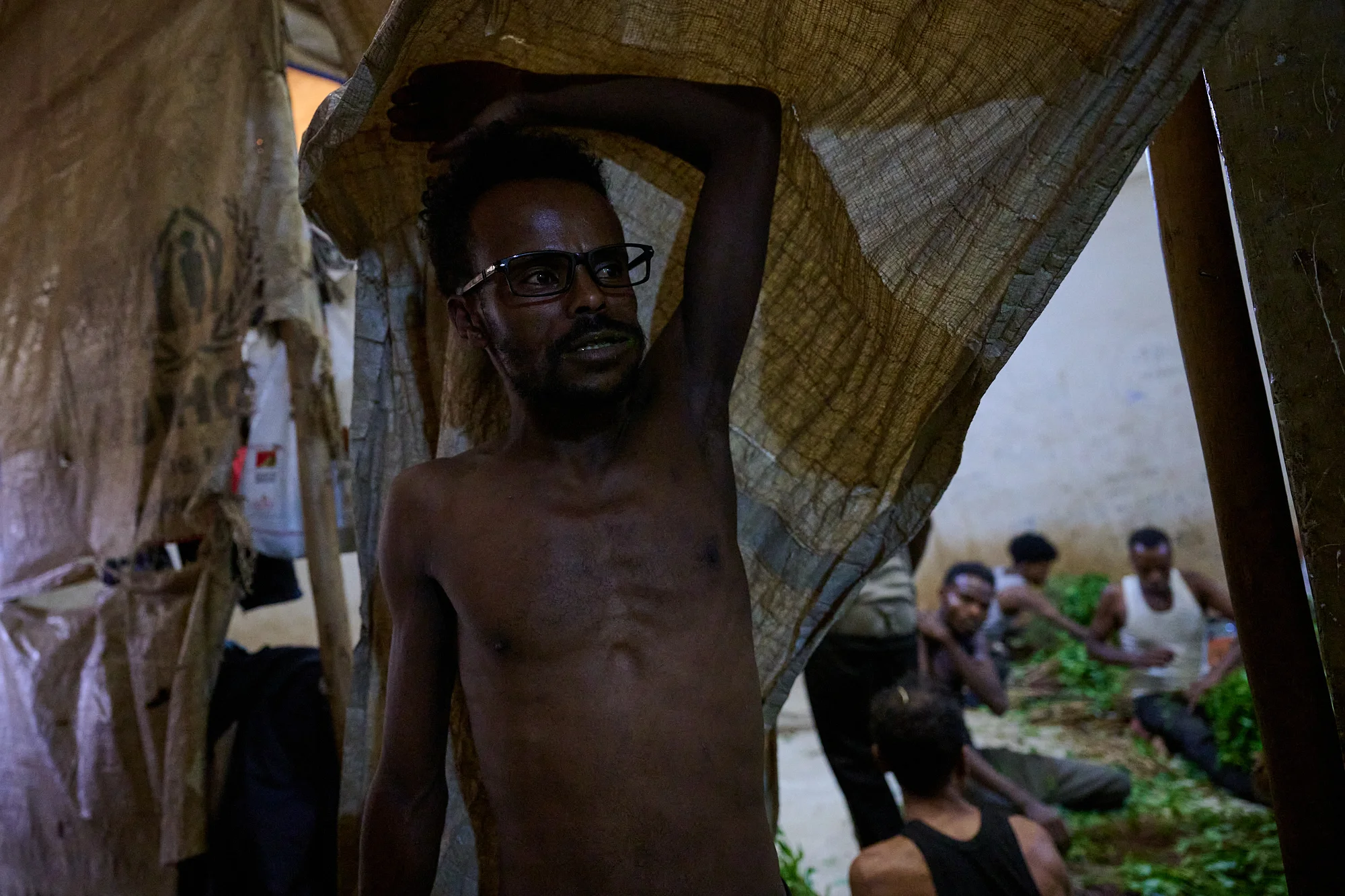
Behind the sacking, the sorters at work.
20 / 38
Bundles stacked against the wall.
21 / 38
Sorters in the hall, some shy, some curious about the camera.
22 / 38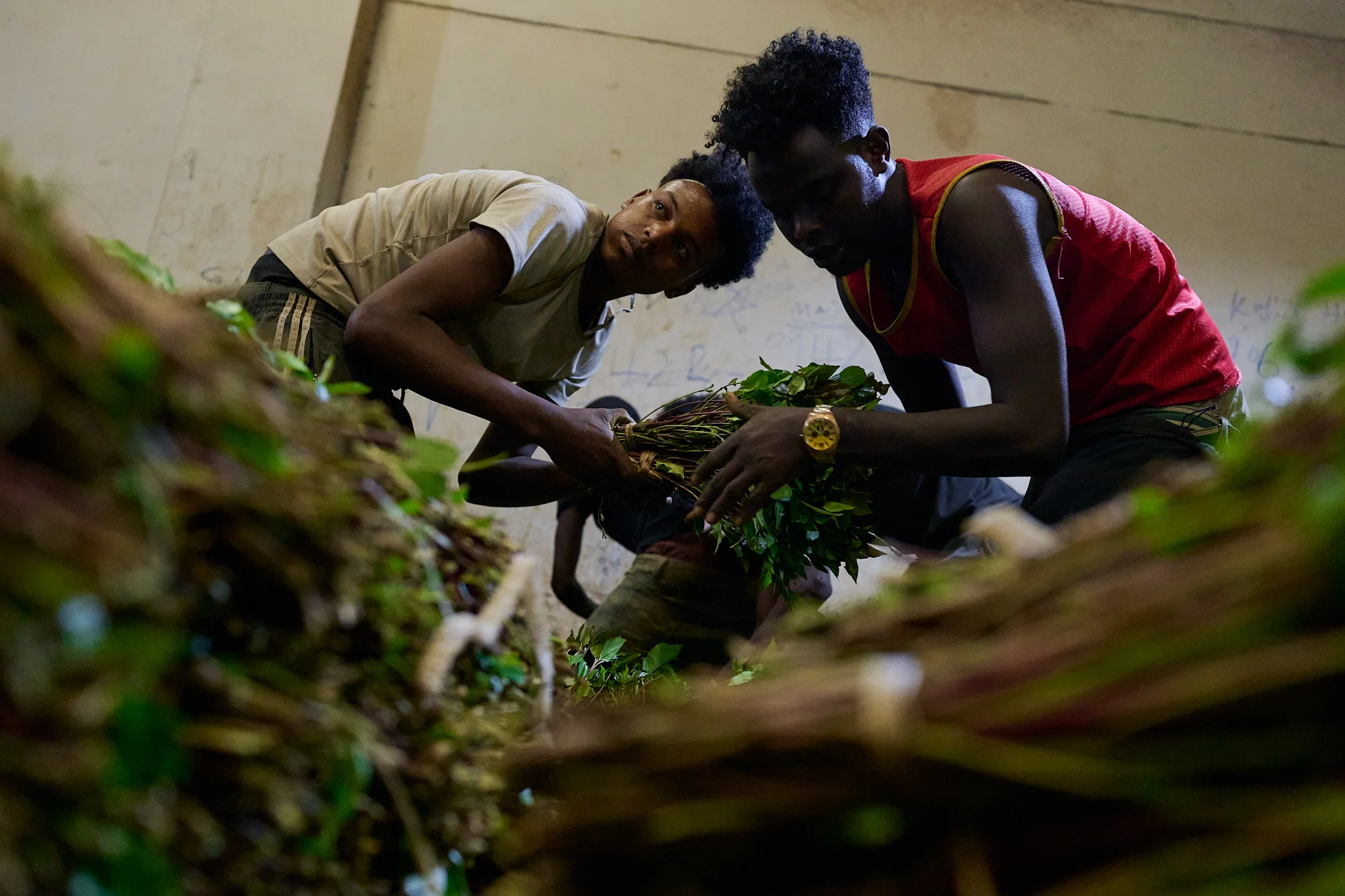
A gold watch, and leaves that won't wait.
23 / 38
Young men on a red tarpaulin, waiting for the next load.
24 / 38
The street after a truck has been unloaded and gone.
25 / 38
After work.
26 / 38
The way out of the market, quieter now, under a rainbow.
27 / 38The bags
In Harar khat, or chat, is on sale from early morning, but the street trade really picks up around midday and grows through the afternoon. Suddenly there are clear plastic bags everywhere in the street, each one a portion for the afternoon and the evening. Some of the sellers sit on the pavement, others in small, dark shops.
Buyers study the leaves before they pay. What counts is how young and tender they are: small leaves from the tips cost more, larger and older ones less, and a reddish stem is taken as a sign of strength. In the shop where I asked, a bag cost between 200 and 400 birr depending on quality, roughly one to two US dollars.
The timing follows the working day. A study of chewers in Harar found that many leave work before noon and come back around three, after a session that usually lasts three to five hours. The afternoon session has its own name, barcha. On average, the chewers in that study spent close to a third of their income on khat.
Khat is chewed everywhere: on cushions at home, on the floor of a room, alone against a wall. It is part of how people spend time together, and more than once someone held out a sprig to me with a grin, as if to say: go on, try it. One afternoon a woman named Layal invited us into her home and offered us khat, as guests are received here. In front of us stood a burner full of embers, and every so often she took a pinch of dark powder from a yellow tin and scattered it over them, until the room was full of its scent. Incense belongs to the barcha here, like water, sweet tea and the cushions along the walls. I tried a little, curious about the taste. It is bitter, and only the very young leaves are easy to chew. I felt no effect.
People also talk about what it costs them: the money, the afternoons, the hold it can have. A craftsman who had invited me to chew with him at home wrote to me the next day. He asked me not to show the pictures of him with khat. He is a father, he wrote, and he is trying to leave this life behind.

A seller in a small, dark shop.
28 / 38
Buying at a blue door.
29 / 38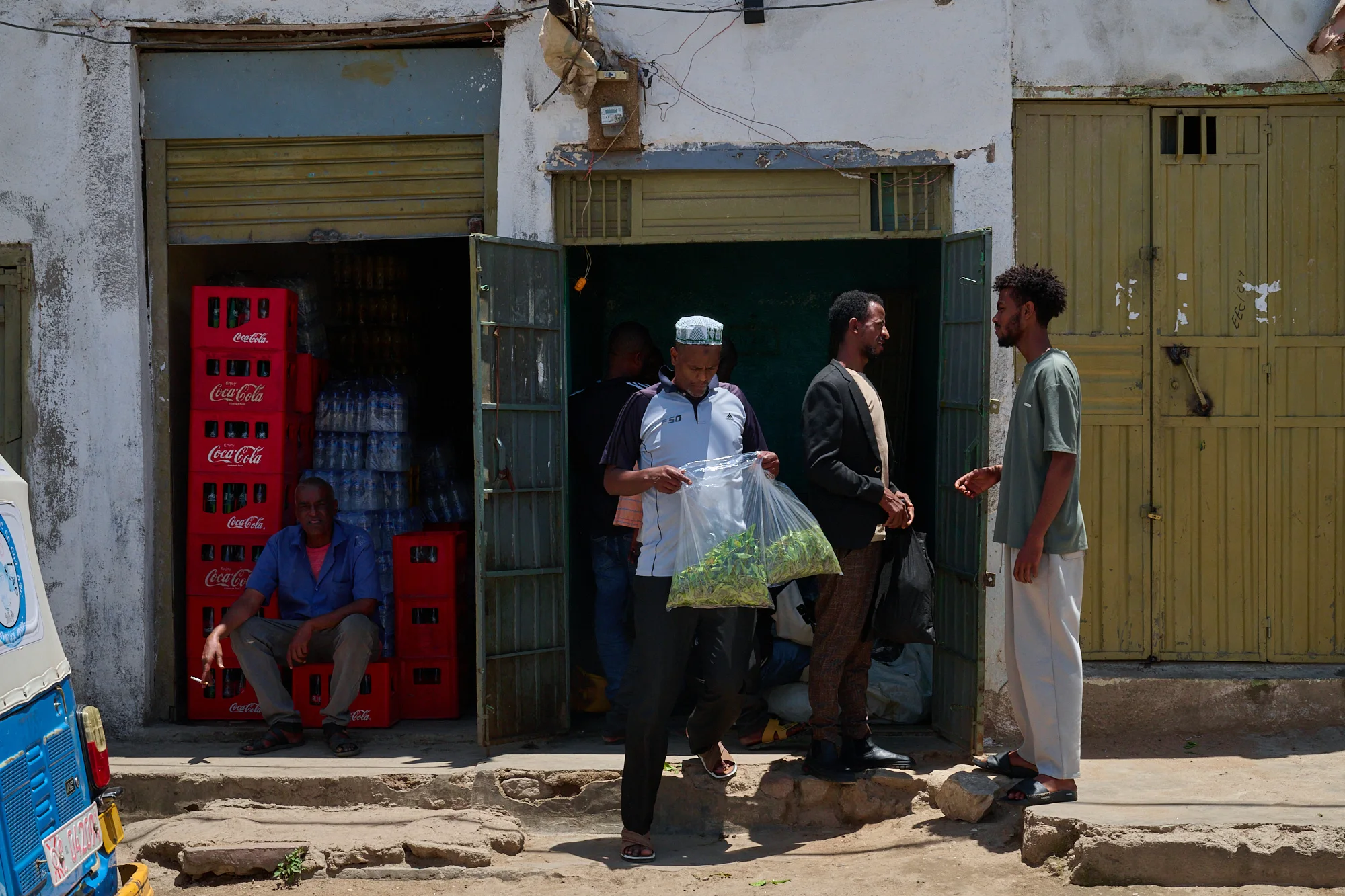
Outside a shop in the old town.
30 / 38
Outside the Erer Gate, a boy with two bags, most likely an errand for his family.
31 / 38
Opening a bag.
32 / 38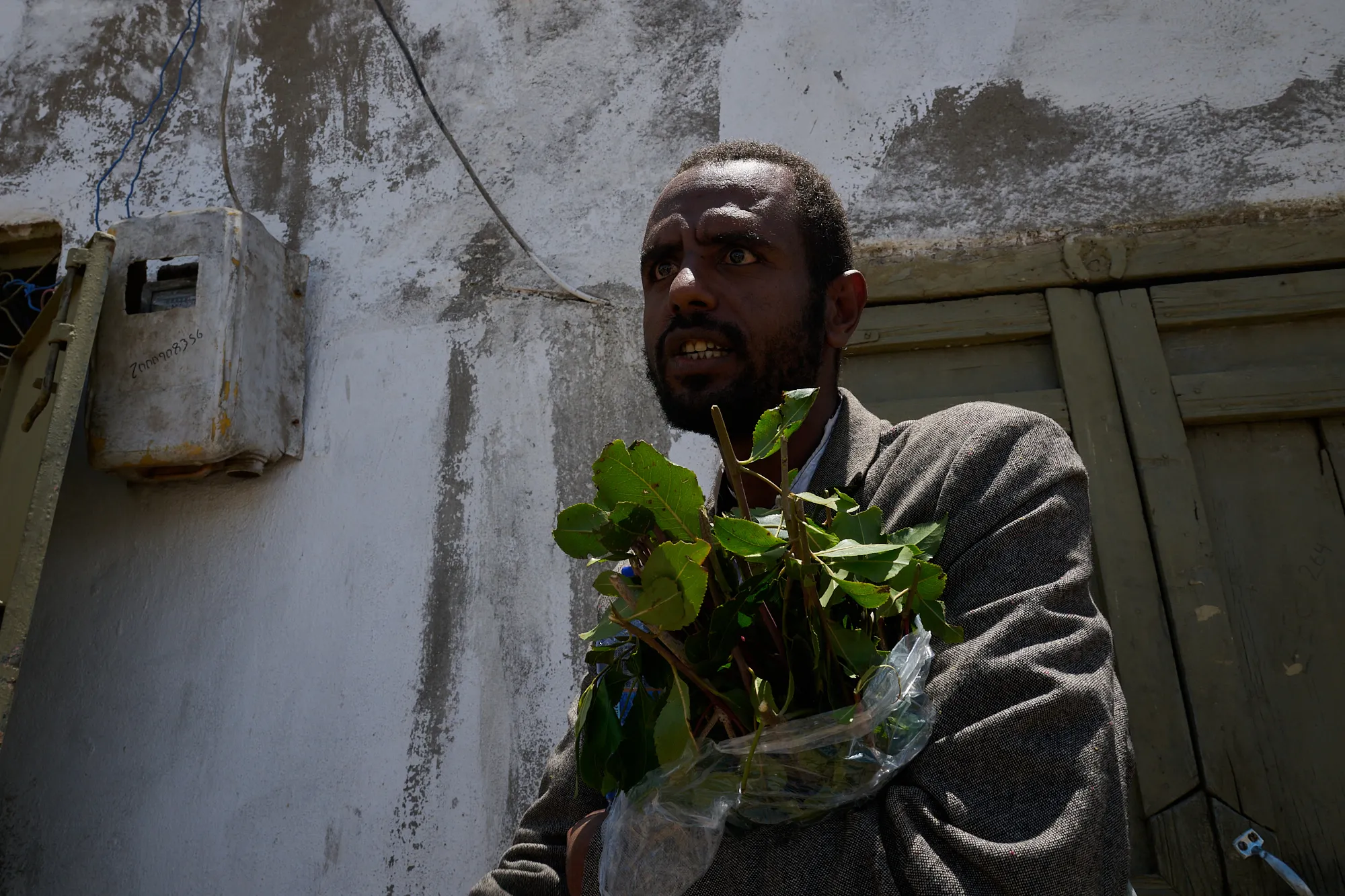
His portion for the afternoon.
33 / 38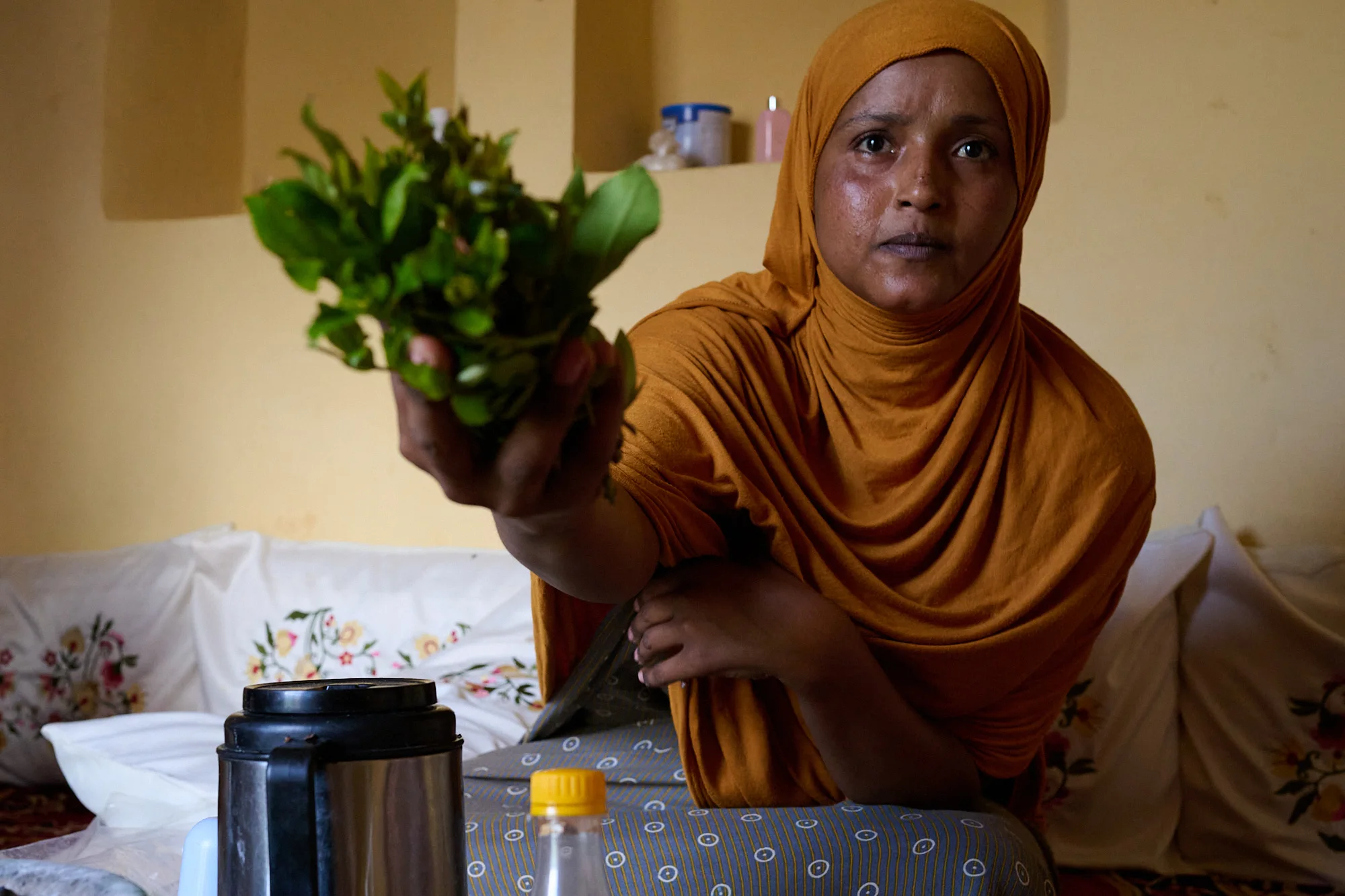
Go on, try it.
34 / 38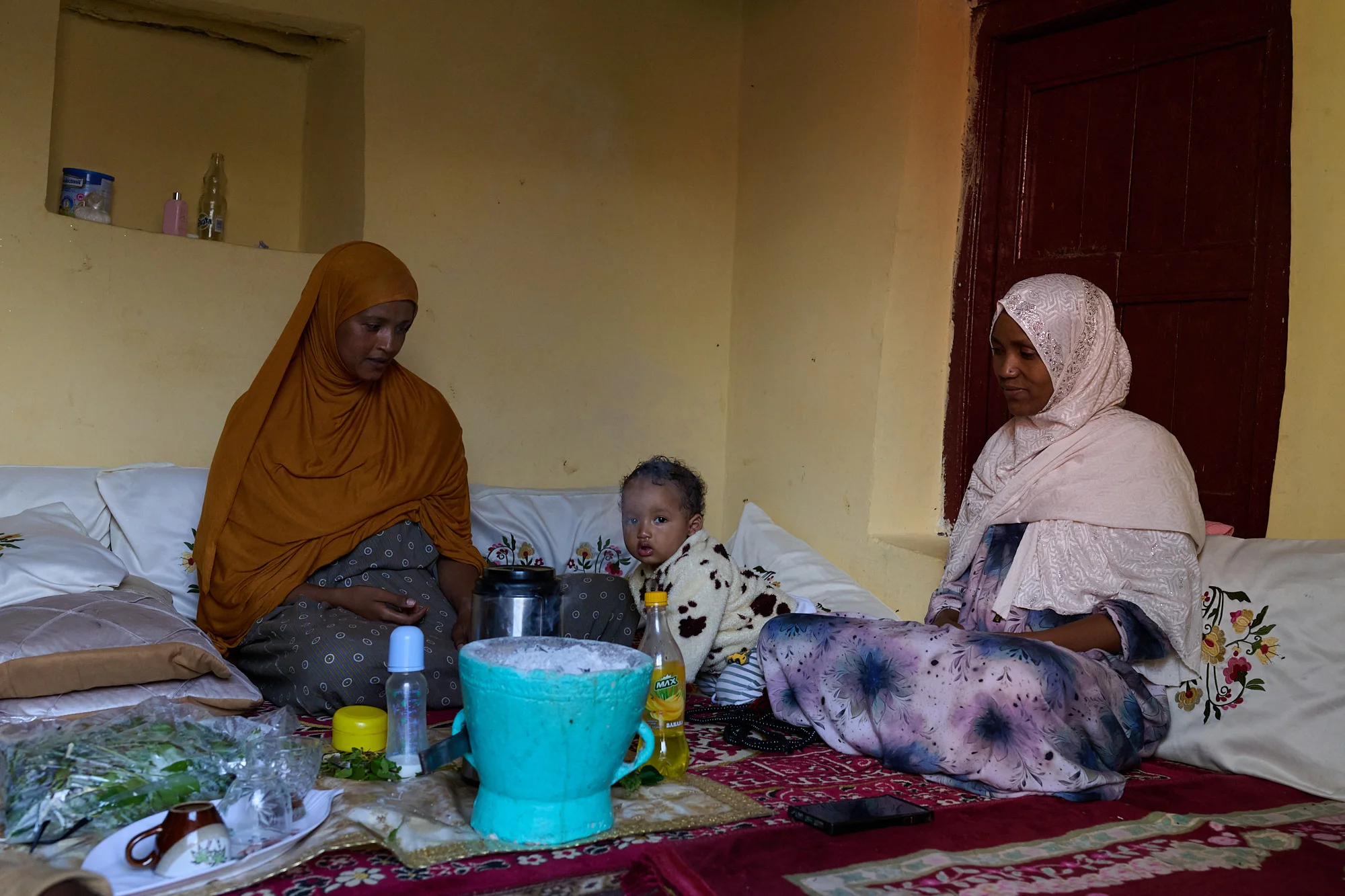
Layal at home in Harar. She invited us in and offered us khat.
35 / 38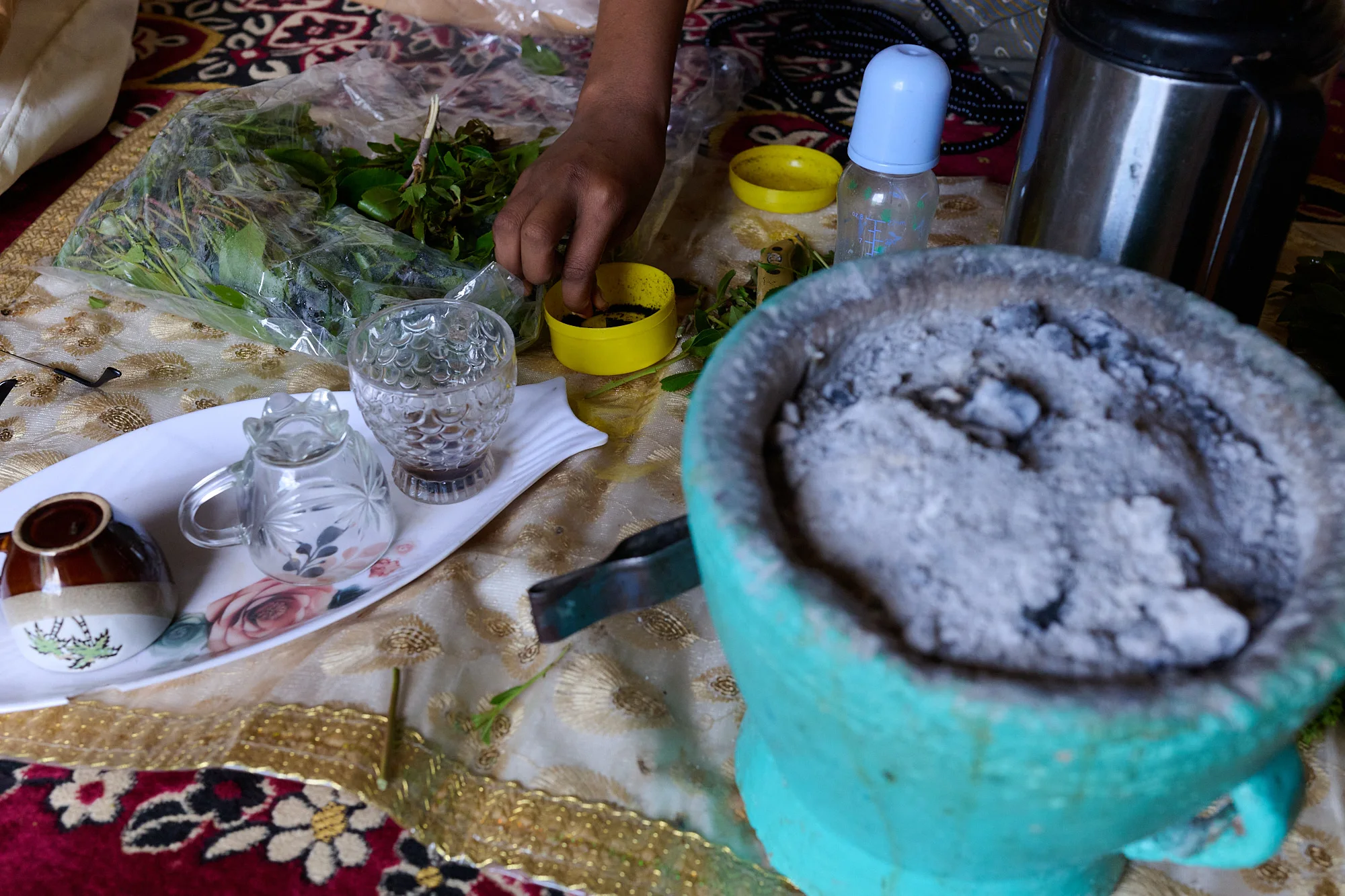
Embers in the burner. From time to time Layal adds a pinch of incense from the yellow tin.
36 / 38
Near the Harar Gate, on a newly renovated street: women from the building site take their break.
37 / 38
Between shifts, a worker chews in the shade of a wall.
38 / 38More from the same trip: my journal entry Ferenji around Harar, on the children I met and the word they call out to visitors.
And from the camel market near Babile: my journal entry Blue paint for sold camels, on a silent kind of bargaining.
Photographs and text: Sergej Arent. Made in May 2026 during a workshop with Sergey Maximishin.
With thanks to Abdul of Abdul Harar Tours, our guide in Harar. To travel with him: abdultour64@gmail.com · WhatsApp +251 91 335 5964
Figures: Discover Sustainability (2025) on coffee and khat in Hararghe; AFP/France 24 (2024) on khat farms and exports; PLOS ONE (2019) on khat consumption in Harar.
For editors: the full story of 38 photographs is available for publication. Shorter edits of 10 to 20 images, captions and high resolution files are available on request. Get in touch.