
Sold camels get blue paint on the rump. A young man walked through the herd with a can and a brush.
01 / 13Before the market there was a village. A camel stopped and looked straight at me. Round huts covered in patches of cloth stood between prickly pear and tin-roofed houses. They are aqal, the portable homes of Somali herders. Women build them, and a family can take one apart and load it onto camels.
Then came the market, a field full of camels. There were hundreds of them, standing in loose groups on red earth below green hills of granite boulders.
The market lies about nine kilometres south-east of Babile town, in a region where Oromo and Somali live side by side. Travel guides give Monday and Thursday as market days. I stayed until the sun stood high and the light was no longer good for photographs.
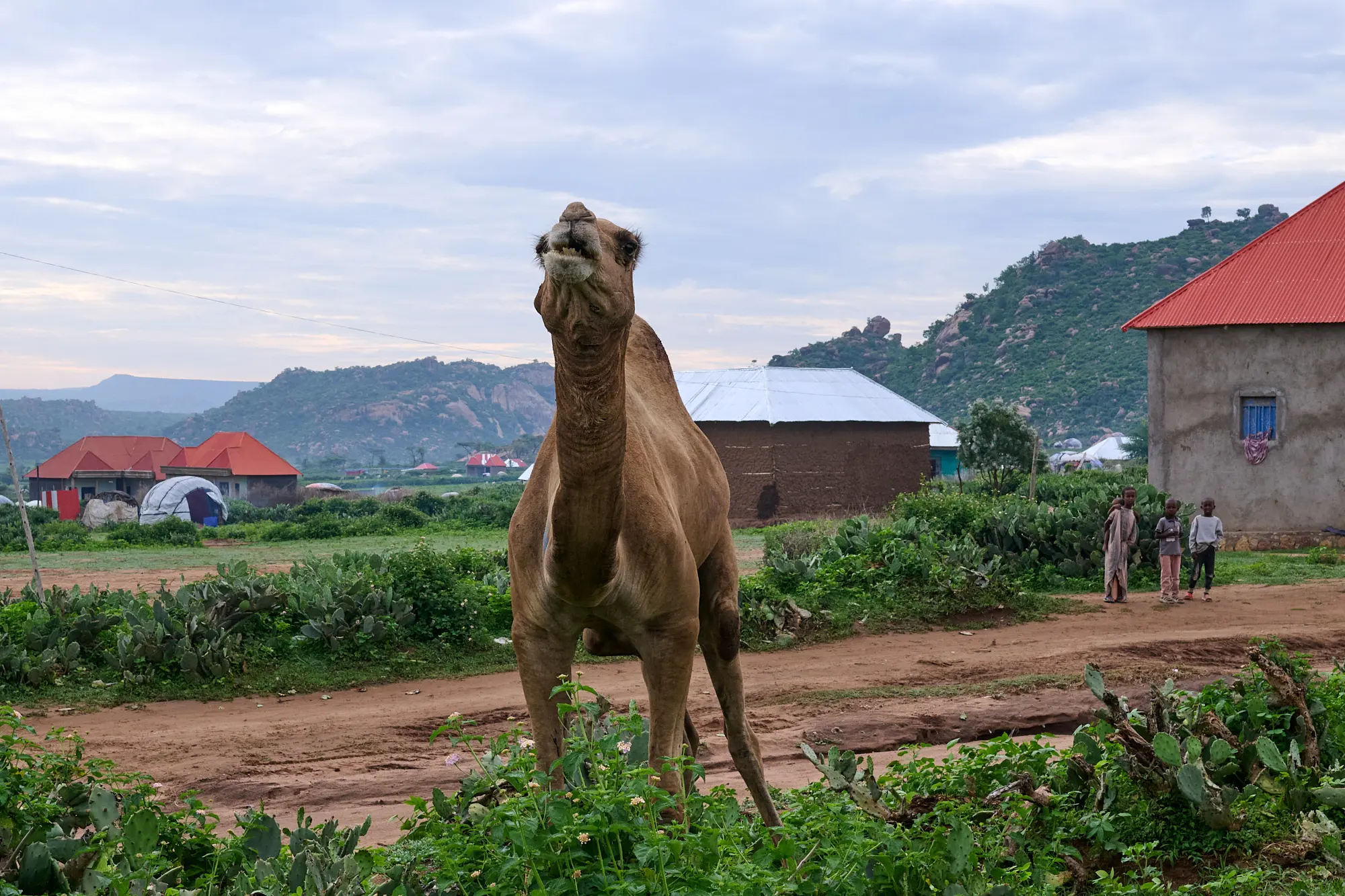
A camel in the village just before the market, with huts in the background.
02 / 13
A round hut, an aqal, covered in patches of cloth.
03 / 13
Hundreds of camels on the market field early in the morning.
04 / 13
Tea is sold at the edge of the market. I was offered a cup, but my hands were full with the camera.
05 / 13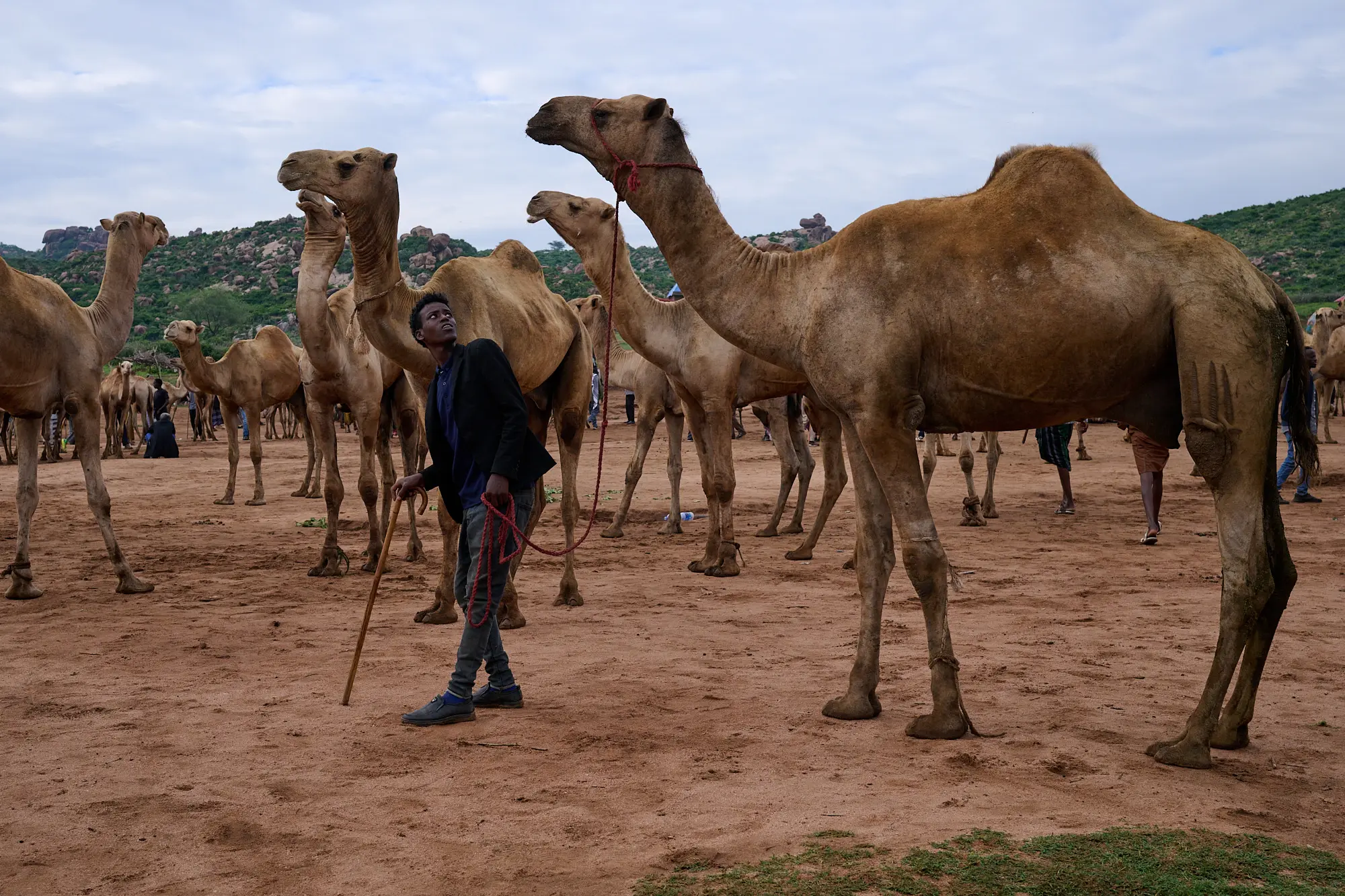
A young man leads a camel by a red rope. People here treat these big animals with respect.
06 / 13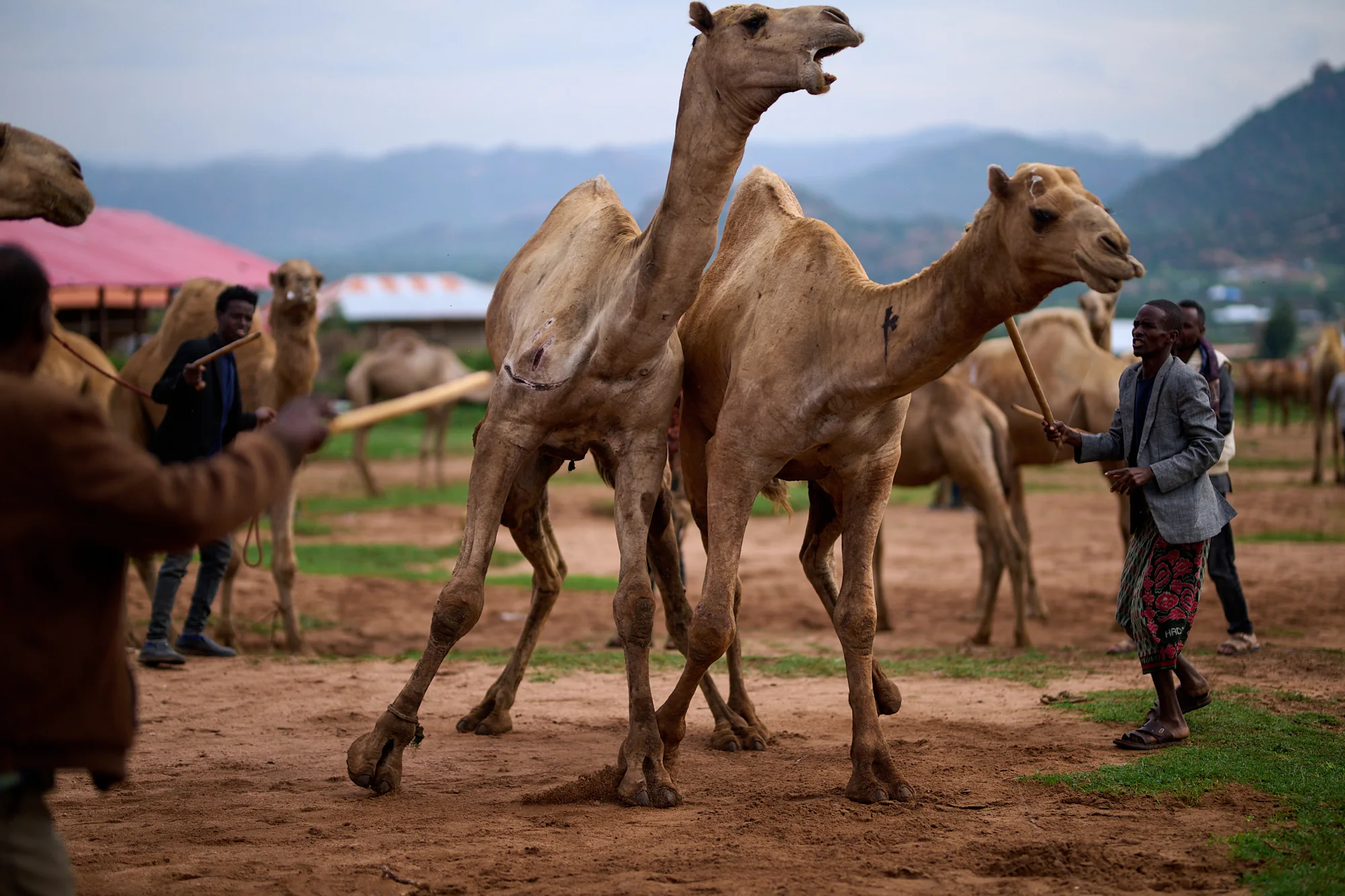
Two camels clash. Men step in with sticks and drive them apart so the quarrel does not escalate.
07 / 13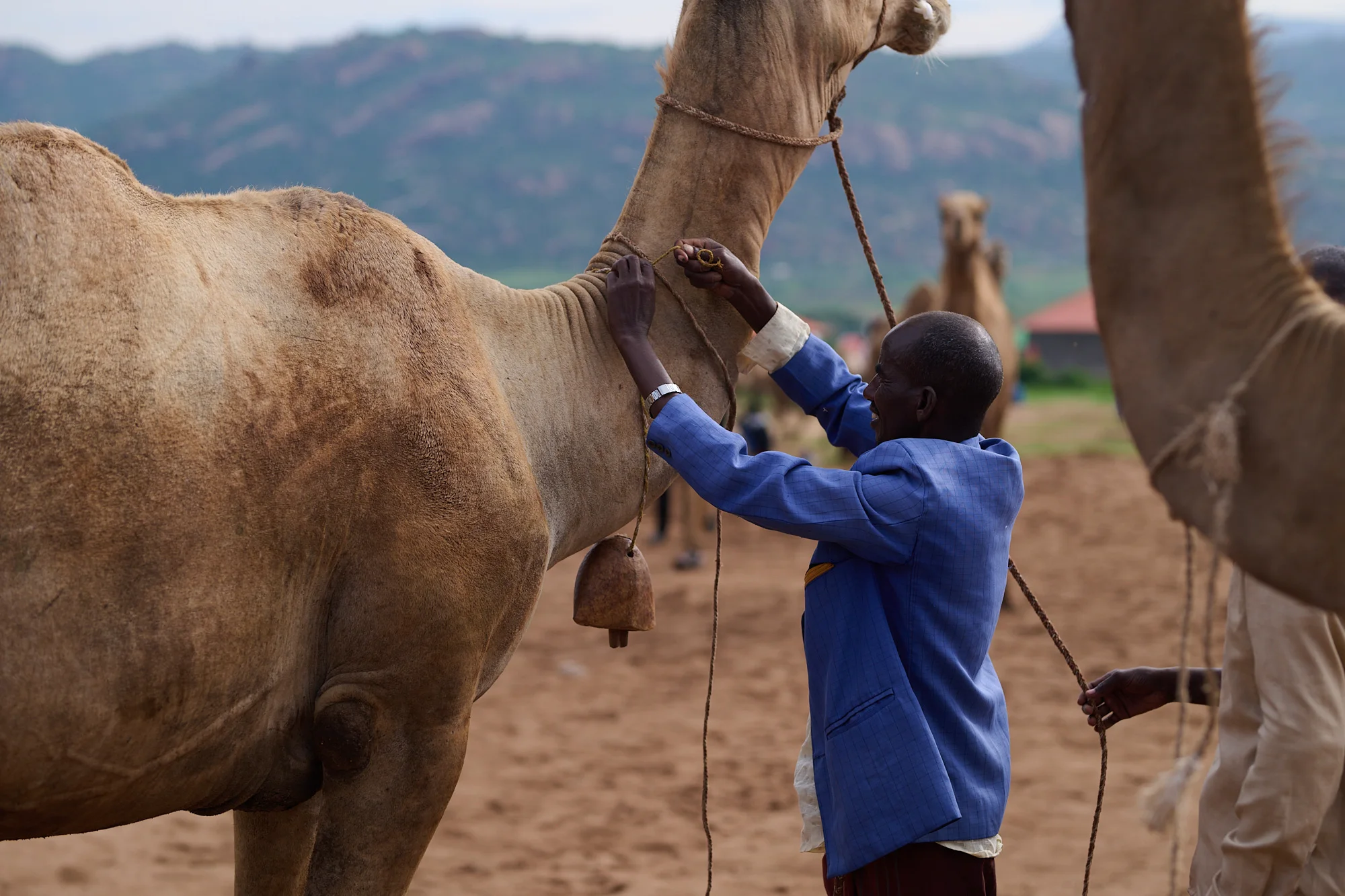
The bell is tied on. Somali herders use wooden bells, called koor, to find their animals in thick bush. The other camels around this one had none, so I assume this one was decoration.
08 / 13
The same man with the camel and its bell.
09 / 13The day before, our guide had warned us to be careful whom we shook hands with at the market: shaking hands could mean we had bought a camel. I took it for a joke.
Again and again I saw the same bargaining. A seller walks up to a buyer, makes an offer and takes his hand, and does not let go. The two do not speak. Offer and price pass between them through a sequence of presses, pinches and grips of the fingers, knuckles and hand, so nobody around can learn or influence the price. When they agree, they shake hands. The guide had not been joking.
A seller told me a camel costs about 1,000 US dollars, less for a weak animal and much more for a very good one. Most of the animals go to Saudi Arabia, mainly for their meat. Paying for a whole herd in birr is hard to imagine: when we changed 100 euros, my pockets were full of banknotes. So I asked how it is done. The money is transferred electronically, with mobile phones.
For many herders a camel is savings, sold when the family needs cash. Many end up as meat: at lunch that day we tried camel meat on injera. It was tougher and drier than I am used to, but that is a matter of taste.

Bargaining in the middle of the herd.
10 / 13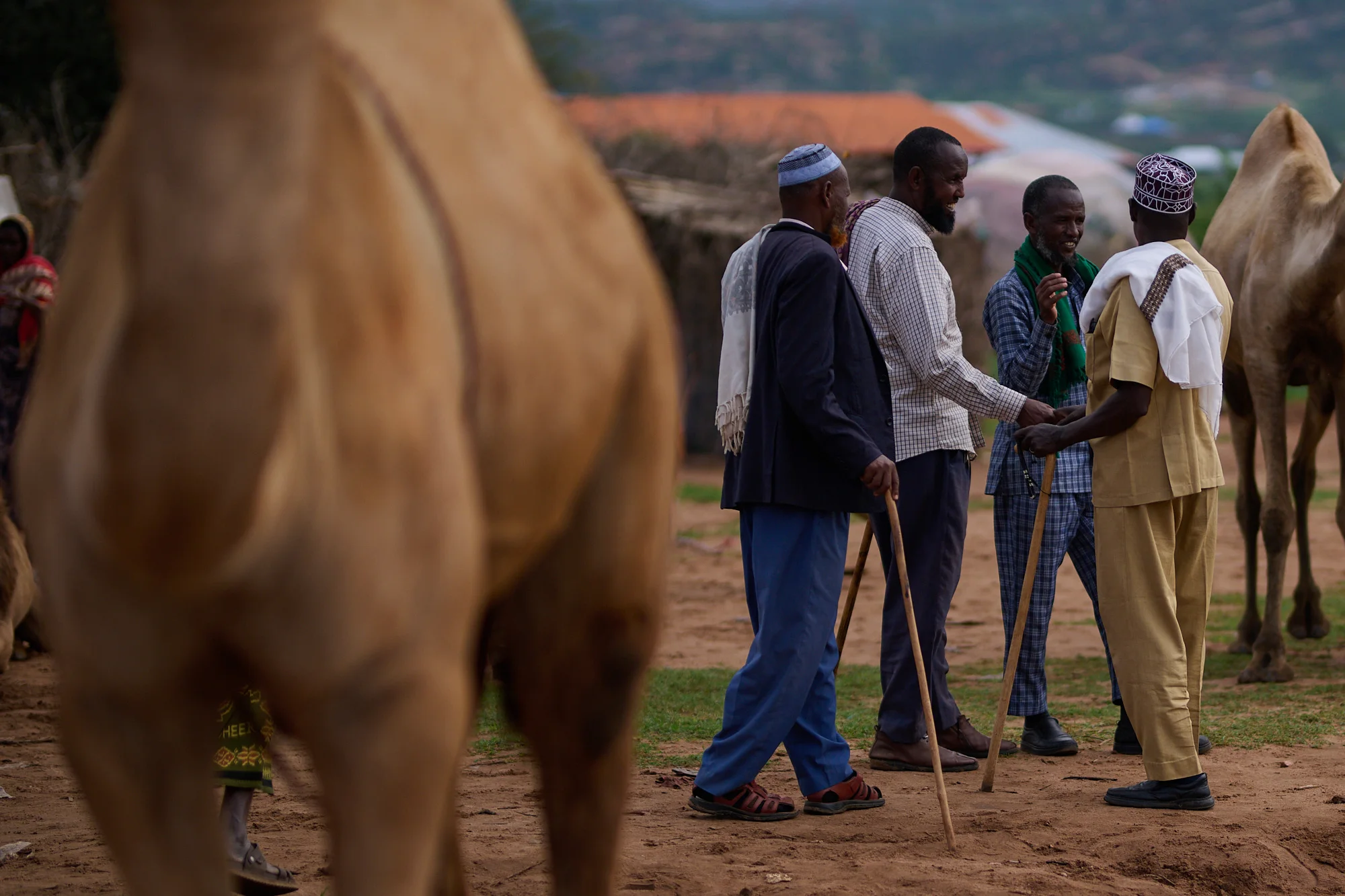
Another negotiation: the offer is passed on by touch, not by word.
11 / 13
A seller makes his offer and holds on to the buyer's hand.
12 / 13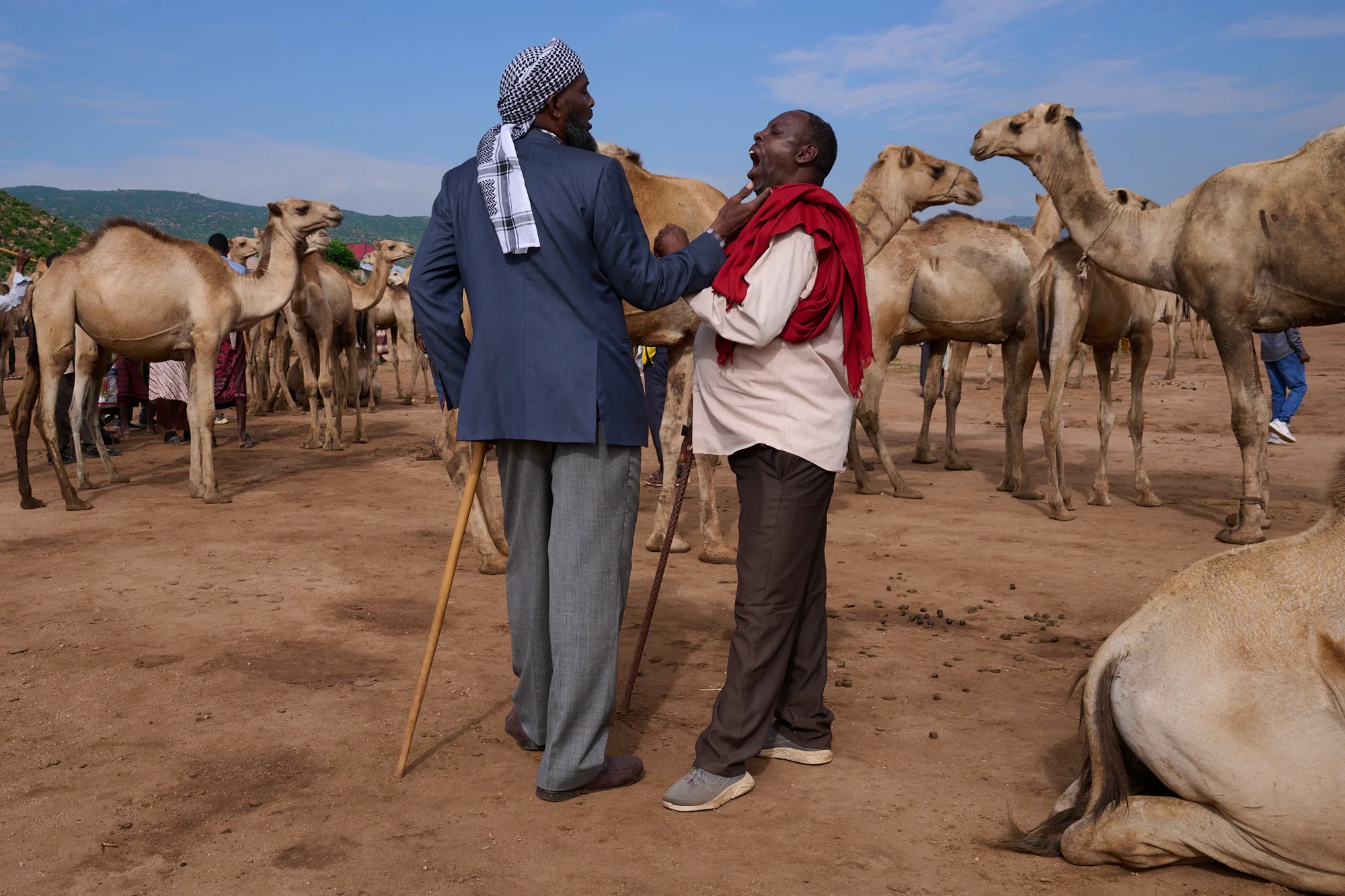
Not everything here is serious. These two were joking.
13 / 13The mood here felt more tense than at the khat market in Awaday, although it was much calmer. Many people still allowed me to take pictures. Those who did not made it clear, and I left them alone. Our guide stayed discreetly in the background.
Photographs and text: Sergej Arent. Photographed in May 2026 near Babile during a workshop with Sergey Maximishin.
Sources: Wikipedia (Babile); Utah State University, Bells and Animals (Somali koor); Endangered Material Knowledge Programme (Somali aqal and mats); market days from travel guides; prices and payment from people at the market.