Dyeing cloth by hand in Dharavi

The dye is already in the vat. While the water runs in, the cloth waits in the basins.
01 / 09Everyone stood around the vat while one man filled it with water. That was the moment we walked into the workshop, and I had no idea what I was looking at. I did not know why they were waiting, or whether the cloth beside them was about to be washed or had just been taken out. A moment later the men started to work and put the cloth in.
I had a few hours in Dharavi during a business trip to Mumbai. My guide Balaji grew up in the district. With him we ended up more or less by chance in this workshop. Men dye cloth here in vats, entirely by hand.
Dharavi is known for its slums, but it is also an industrial district. According to official estimates there are 4,902 industrial units here, 1,036 of them in textiles, although counts differ from source to source. Most workshops are small, often no more than 200 to 300 square feet, which is about 20 to 30 square metres.
The room was a low hall with a corrugated-iron roof, stained pink and rust. Beige cloth lay in heaps beside large aluminium vats. The dye was already in the vat, and the hose filled it until the bath foamed a deep crimson. Each man had a large basin of cloth, and they tipped them in all at the same time. Afterwards they lifted the cloth out, shook it, pulled it apart and wrung it out.
What fascinated me most was the teamwork, and the rhythm. It has a reason. The cloth has to go into the vat at the same moment and then move up and down evenly. That way the dye spreads equally and the cloth does not end up with lighter or darker patches. It is a technique that surely takes practice, and this team worked flawlessly.
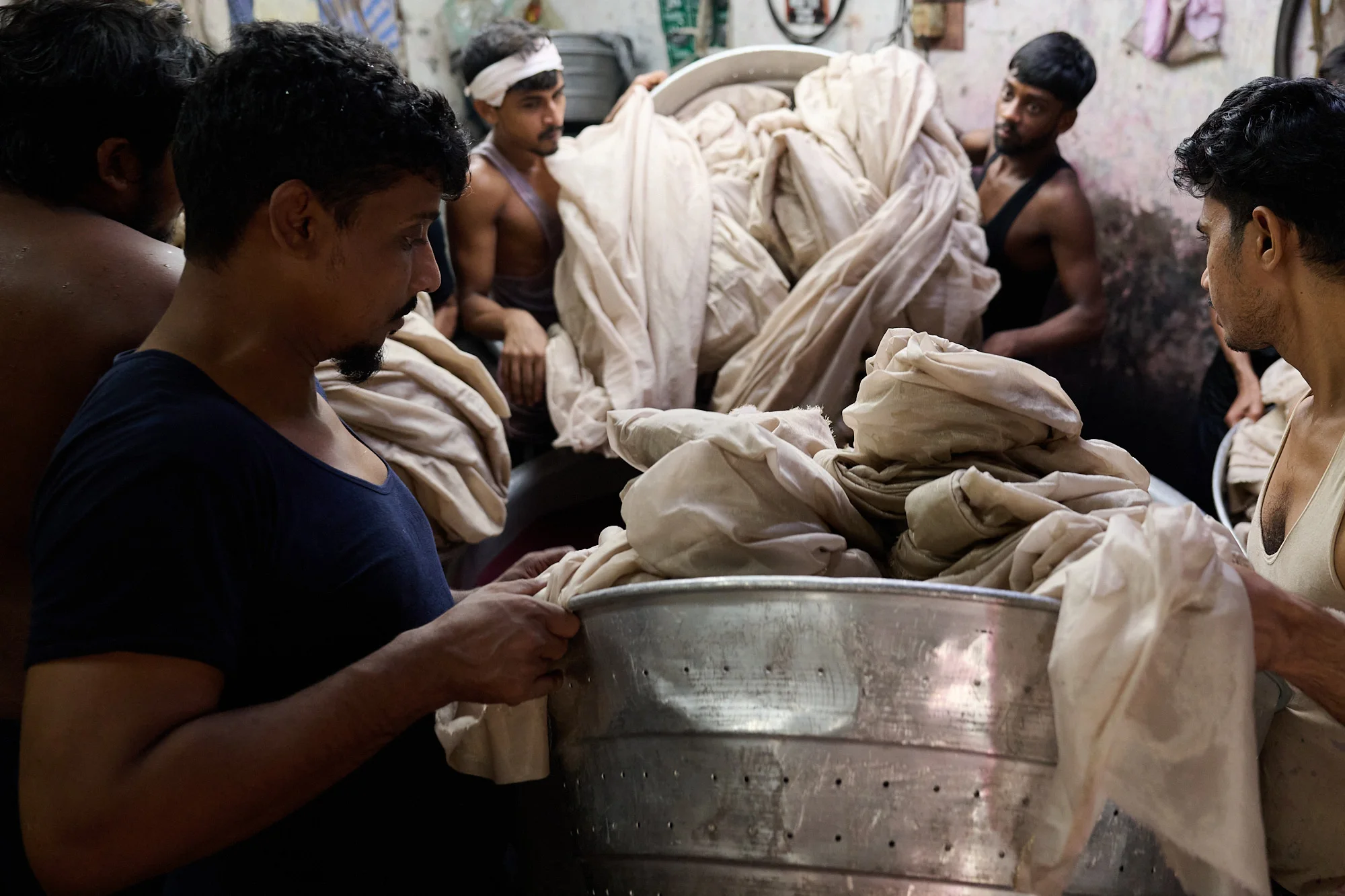
The cloth is still undyed. Every basin is tipped in at the same moment.
02 / 09
Cloth is pulled out of the vat and wrung by several hands at once.
03 / 09
The workshop is in Hussainy Nagar. The gas cylinders on the right are probably for heating the water.
04 / 09
Sweat and splashes on the shoulders of the men: this is hard, sweaty work.
05 / 09
Around the vat everyone moves the cloth up and down in the same rhythm.
06 / 09
Balaji had asked for permission before I took the camera out, and the workshop agreed.
07 / 09
In another workshop that does similar work, jars of pigment stand under a wall covered with splashes and hand prints.
08 / 09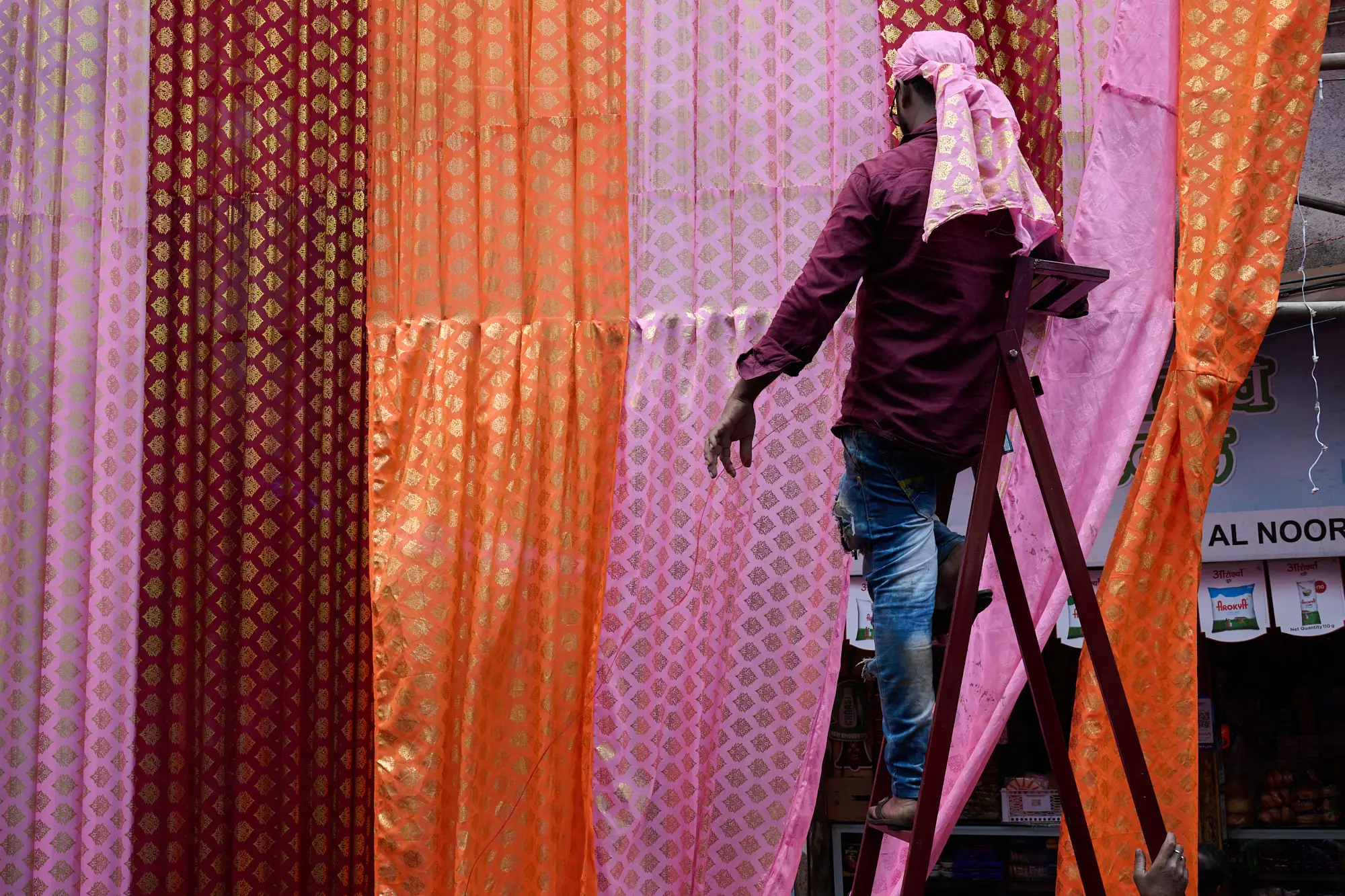
Gold-printed cloth hanging over a street elsewhere in Dharavi.
09 / 09Balaji told me the cloth is polyester and cotton, and that the workshop dyes about 100 kilograms of it a day. From here the cloth moves on to other workshops, where it is embroidered and stitched into women's clothing. Most of it is then sold in Mumbai's markets, some outside Mumbai and some abroad. Dyeing, he said, is only the first stage.
In another part of Dharavi I photographed lengths of gold-printed cloth hanging over a road in pink, maroon and orange. It is not what comes out of these vats. Balaji said it is something completely different, and I did not see the later stages.
Photographs and text: Sergej Arent. Made in Mumbai in September 2025 on a tour with Balaji of Mumbai Experiences.
Sources: Down to Earth (Dharavi's industrial units); Revolve (size of workshops in Dharavi's compounds); the cloth, its destinations and the daily volume from Balaji.