Ferenji around Harar

A child in a white mask on the way home from school in Jugol, the old town of Harar.
01 / 14I usually heard it before I saw anyone. From far away a child shouted ferenji, and soon there were more of them, in a street, a market or a schoolyard. Most of the children I met around Harar were open, curious and friendly, and many wanted to see the pictures on the camera. Meeting a foreigner is something special for them, and I was grateful for that openness. Some came running. Others kept their distance and half hid behind the others, as children do everywhere.
Ferenji means foreigner, usually a white person from far away. The word reached Amharic through Arabic, which had taken it from the Franks and used the name for Europeans in general. Afaan Oromo, the language of many children around Harar, has the same word, faranjii. In English it appears as ferenji, faranji, ferenj or faranj; in Amharic it is written ፈረንጅ. It belongs to the languages the children grow up with.
Harar is a good place to hear it. For centuries the walled city was a commercial centre, linked by trade routes with the Horn of Africa, the Arabian Peninsula and, through its ports, the outside world. In 1855 the British explorer Richard Burton called it the emporium of the coffee trade. In the 1880s the French poet Arthur Rimbaud worked here as a trader in coffee, musk and skins. Both were what a child today would call ferenji.
The trade goes on. Twice a week Babile, east of Harar, holds a large camel market. A 2010 study found that most camels sold there went on to Berbera in Somaliland and some to Djibouti, ports from which livestock is shipped to Yemen and Saudi Arabia. Prices are not called out at the market. Buyer and seller press the joints of each other's fingers to name a number, and three handshakes close the deal, so nobody around knows what was paid. Khat leaves the market in Awaday by truck for Djibouti, Somalia and the Arabian Peninsula.
Arabic brought the word. The foreign language the children learn now is English. Since 1994 Ethiopian children have been taught in their mother tongue in the early grades, and English is a school subject from the first year. At a village school east of Harar, three English sentences are painted on the entrance steps. One reads: The human mind is our fundamental resource. The teachers were as open as the children and showed me their classrooms.
Strangers have always brought something to Harar. I brought pencils, stickers and exercise books to a few schools. Within minutes they were gone, and some children got nothing. I still do not know how to give fairly.

A girl outside the halls of the khat market in Awaday.
02 / 14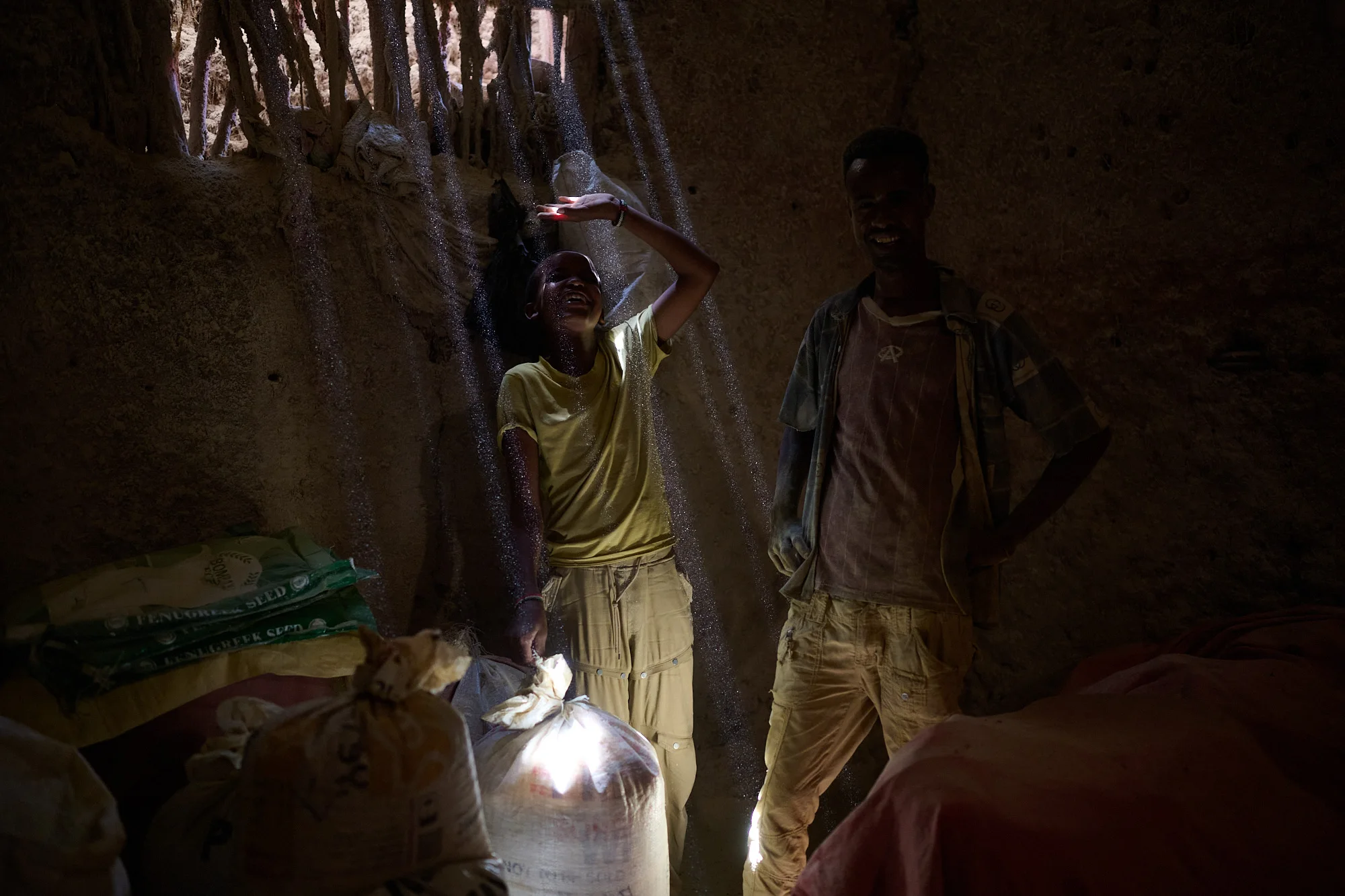
Two boys in a grain mill in Babile, in rays of light and dust.
03 / 14
Football spectators at Amir Haboba Stadium, Harar's old stadium, at the final whistle.
04 / 14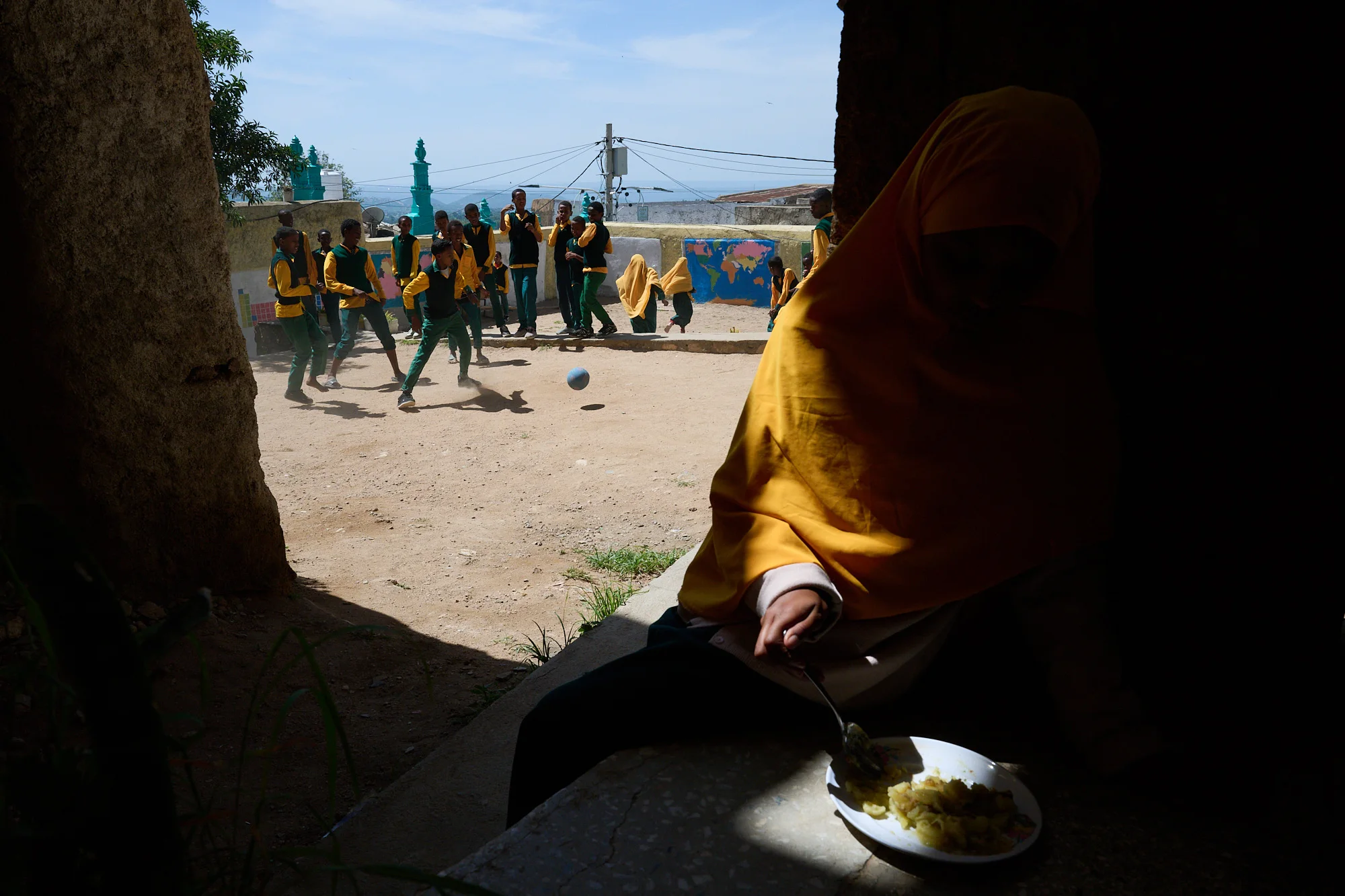
At a school in Harar, a girl has found a quiet corner for her lunch while the boys' football game rages in the schoolyard.
05 / 14
Two girls selling fruit at the bazaar in Harar. Oil-painted walls in Harar can be any colour, but green is the most popular.
08 / 14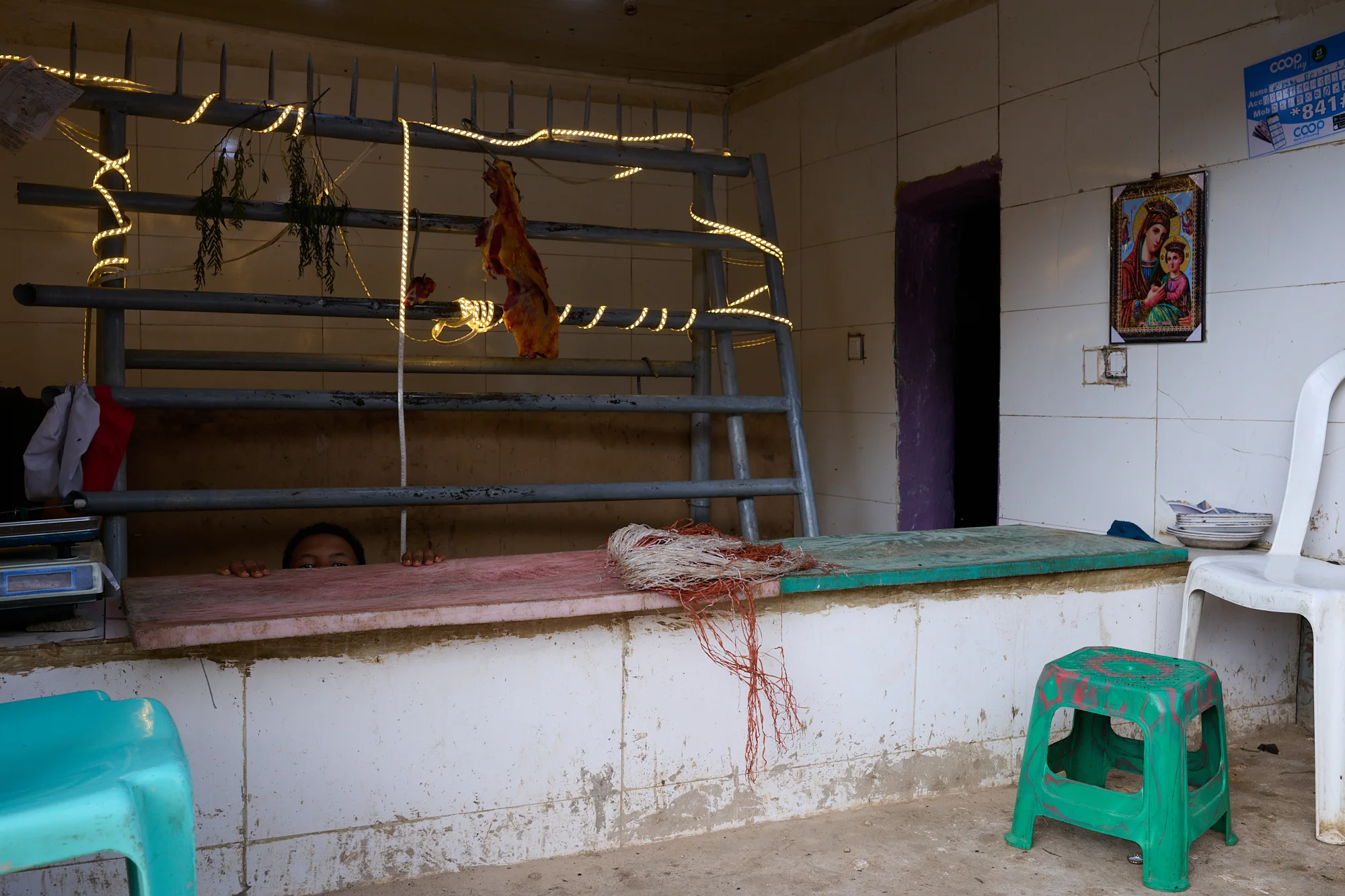
A boy looks over the counter of a butcher's shop in Harar.
09 / 14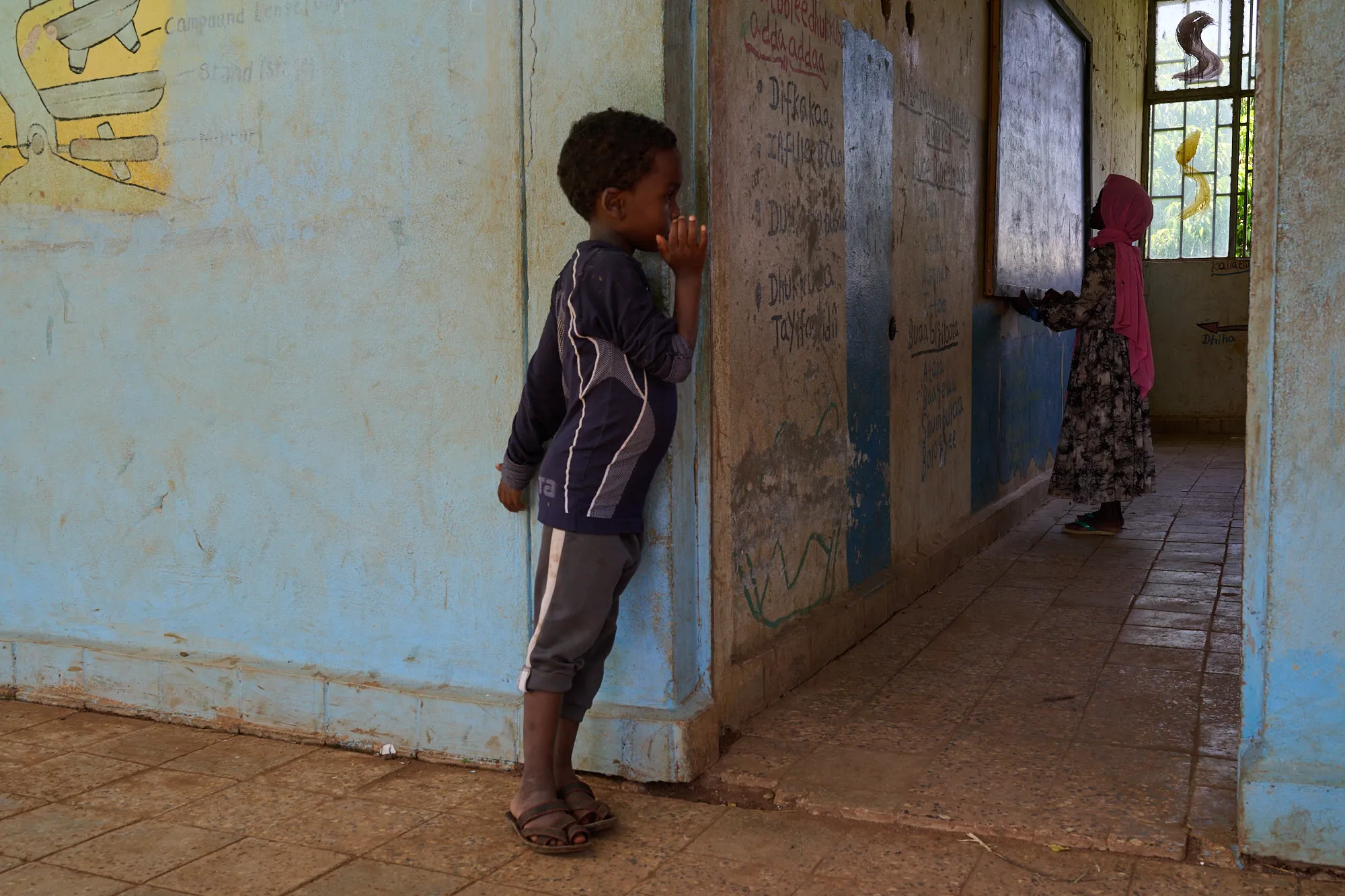
A small boy watches the older children in their English lesson.
10 / 14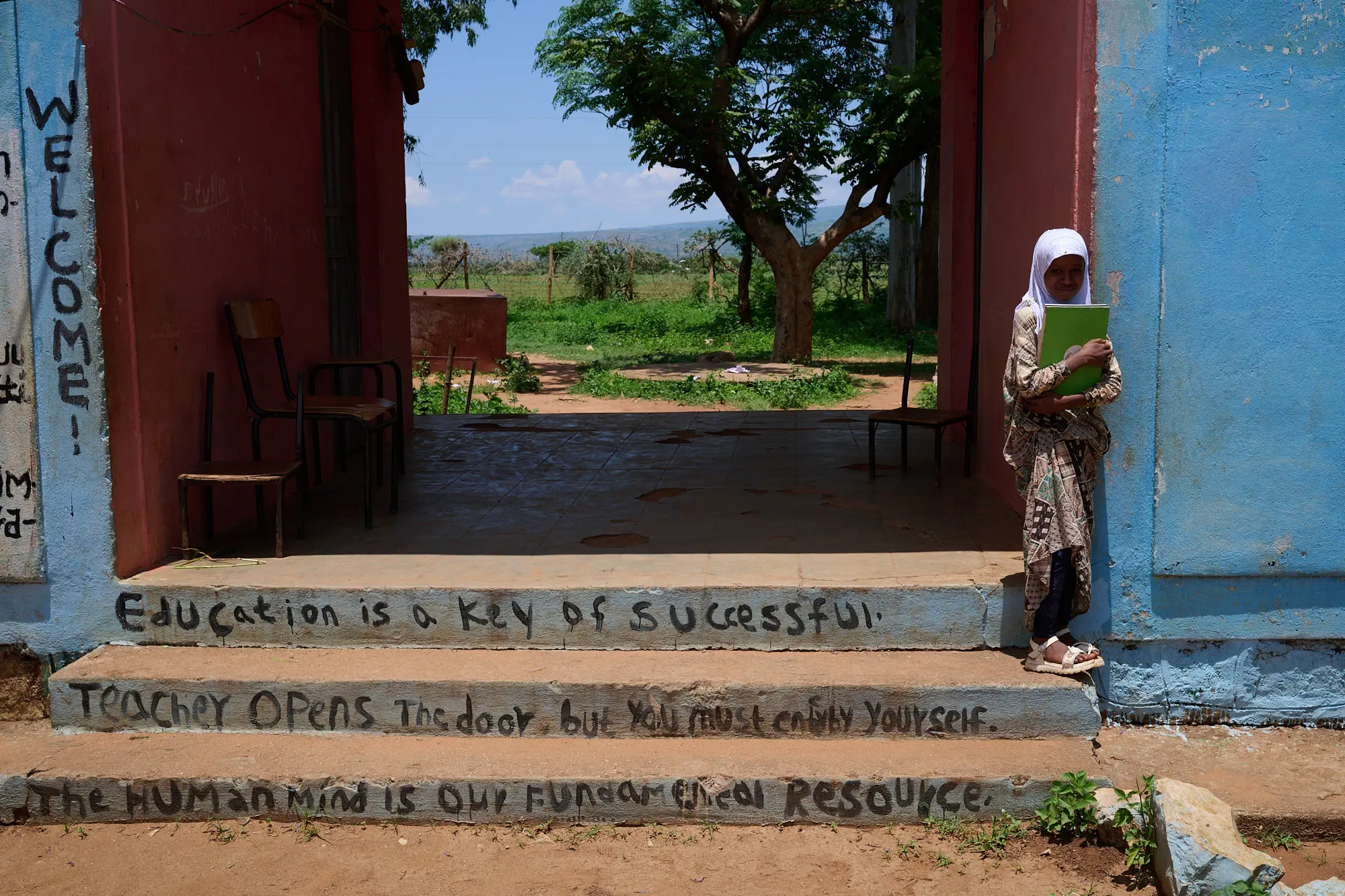
The steps at the entrance of the village school.
11 / 14
Children at the end of the khat market in Awaday.
13 / 14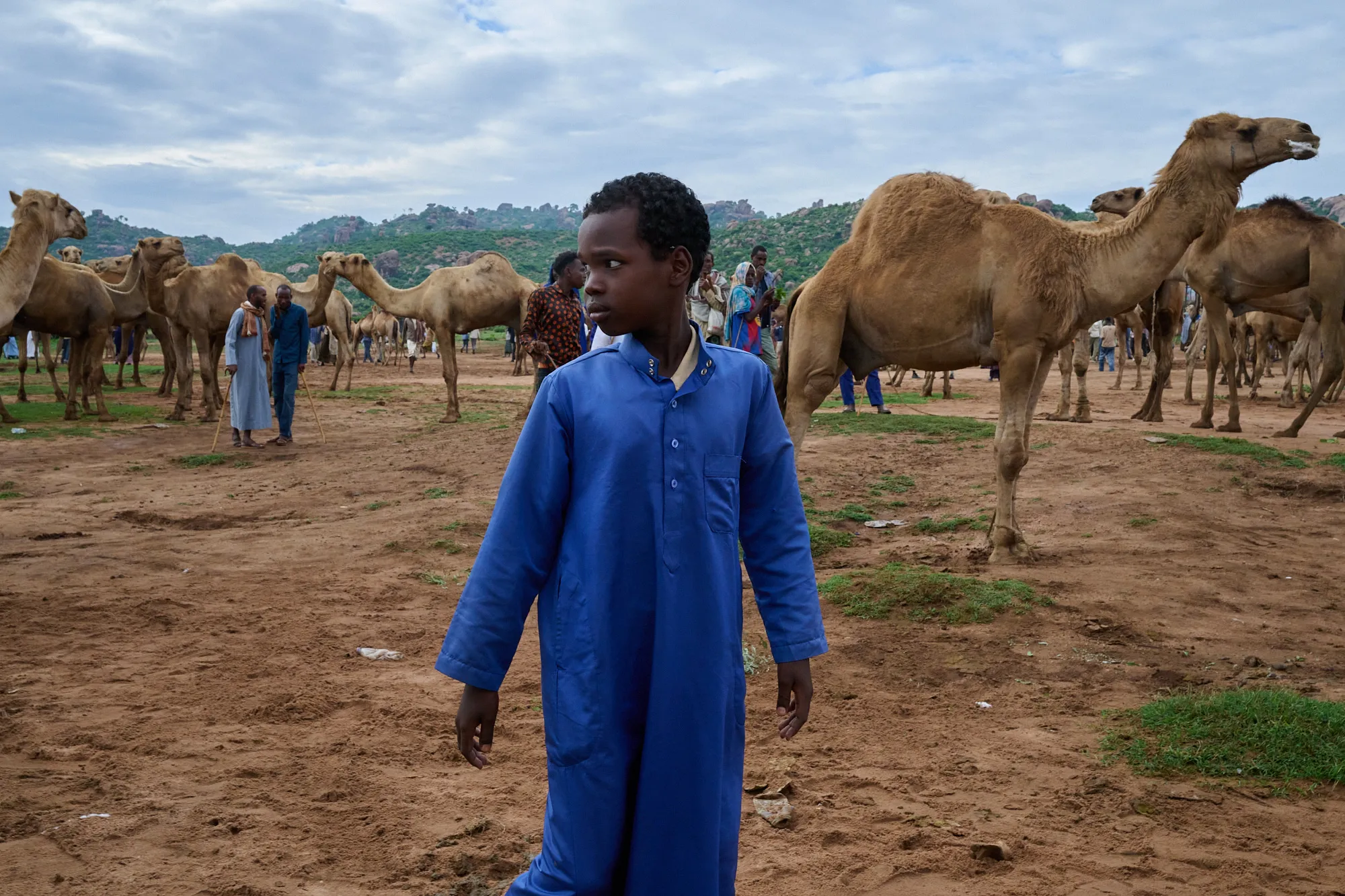
A boy in a long blue robe, a thawb, at the camel market near Babile.
Photographs and text: Sergej Arent. Made in May 2026 during a workshop with Sergey Maximishin.
Sources: Etymonline and Wikipedia (Farang) on the origin of the word; an Afaan Oromo dictionary for faranjii; Wikipedia (Harar) on trade in Harar, Burton, Rimbaud and painted walls; Aklilu and Catley, Mind the Gap (Tufts University, 2010), on the camel trade at Babile; Wikipedia (Education in Ethiopia) and Heugh et al., Study on Medium of Instruction in Primary Schools in Ethiopia (2007) on school languages.